
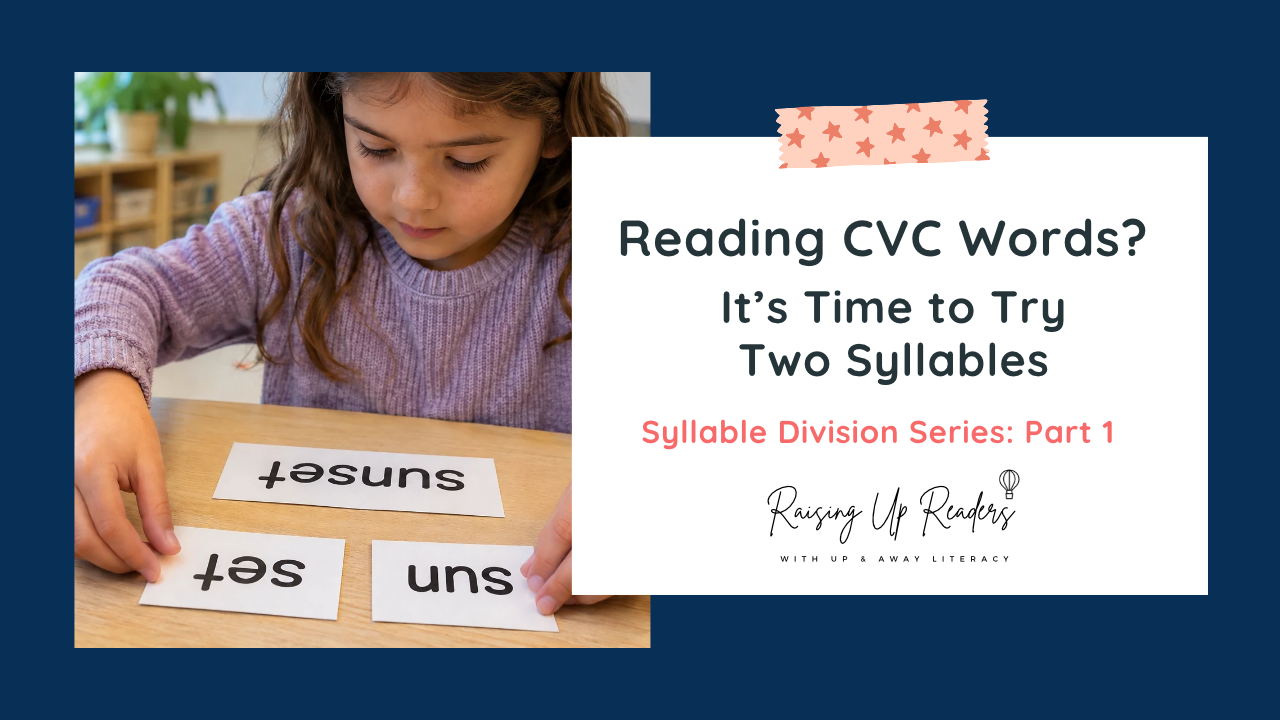
Reading CVC Words? It's Time to Try Two Syllables
Syllable Division Series · Part 1
When you think about teaching students to read multisyllabic words, does it feel like something that should come much later?
Maybe your students are reading CVC words, but you’re hesitant to introduce longer words. They’re still beginning readers. Will finding the vowels and dividing a word be too much?
Here’s a connection that can make that next step feel much more manageable. A word like sunset contains two closed syllables. Each part follows the same CVC pattern your students have already been practicing.
sun + set = sunset
Students will need you to model how to find and read those parts. But when we choose the right words, we can begin building on their CVC decoding skills earlier than we might think.
When Can Students Begin?
Once students can independently blend and read CVC words with familiar letter–sound correspondences, consider introducing a few words made up of two closed syllables. Some students who have mastered single closed syllables may be ready to begin this work by the end of kindergarten.
Start by listening to how your students read words like sun, nap, sit, and pig.
Can they look at the letters, say the sounds, and blend them into a word independently? If so, try a short, supported introduction to a word like sunset.
They can continue practicing single-syllable words while learning how to apply those skills to longer ones.
Connect CVC Words to Closed Syllables
Students have already been reading closed syllables in words like cat, sit, and hop.
A closed syllable has one vowel followed by one or more consonants, and its vowel sound is short. Learning to recognize this syllable type helps students apply their phonics knowledge within multisyllabic words.
Look at napkin.
-
nap has one vowel followed by a consonant.
-
kin has one vowel followed by a consonant.
-
Both parts have short vowel sounds.
When students see those familiar syllable types, a six-letter word becomes two smaller syllables they can work through.
Choosing Words for Early Syllable Division (+ a Free Printable Word List)
When choosing words for early syllable division practice, start with compound words like sunset and catnip. Each syllable is a familiar word, which makes it easier for students to recognize the parts and put them together.
Next, introduce words with a double consonant in the middle, like muffin and rabbit. The repeated consonants give students a clear place to try dividing the word—muf/fin and rab/bit.
Then move to words with less familiar syllable chunks, like napkin and admit. These give students practice decoding each syllable even when it isn’t a word they recognize on its own.
Throughout this progression, choose words with letter–sound correspondences your students have already learned.
To download a free word list progression for VCCV practice, click the image below!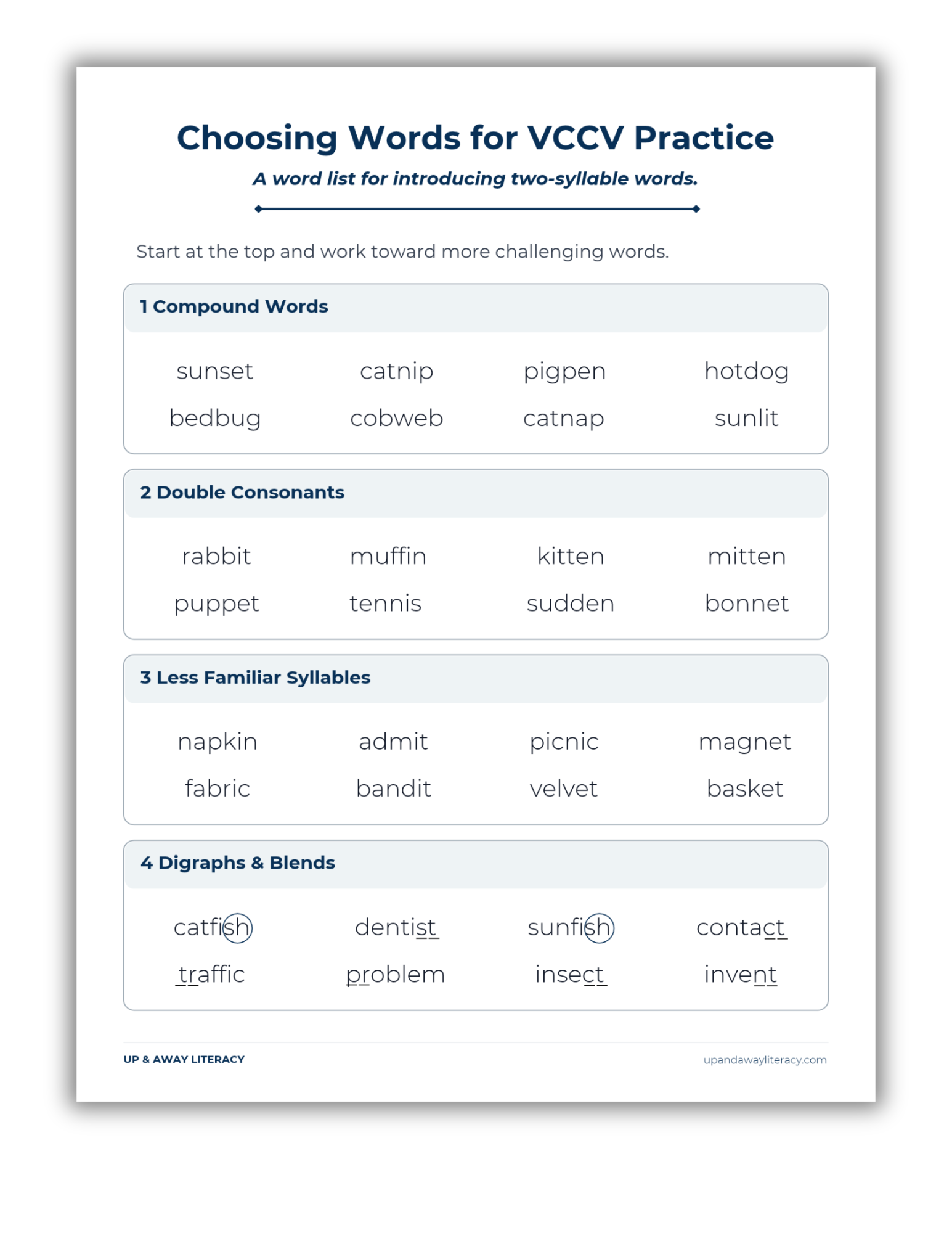
Model a Simple Routine
For an initial lesson, choose a VCCV word that is a compound word like sunset or catnip.
Here’s how you might model sunset.
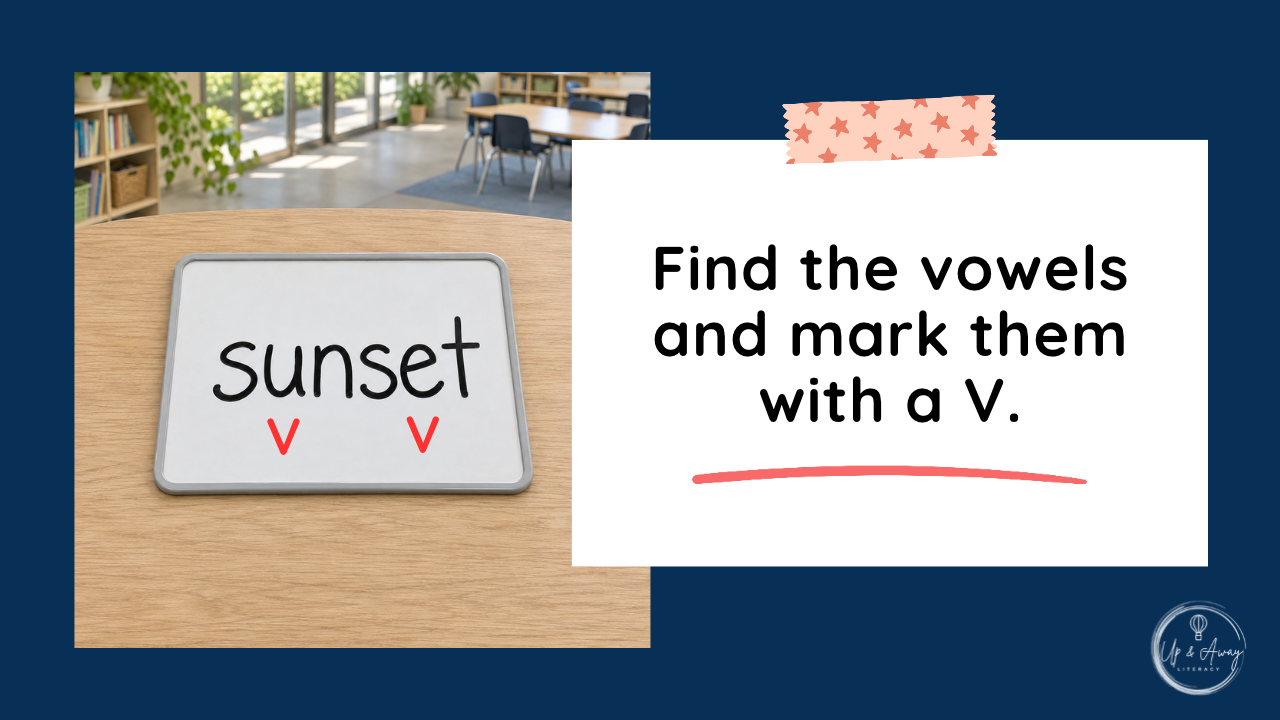
1. Find the vowels and mark them with a V.
Write sunset and draw students' attention to the 2 vowels that are spread apart: u and e.
“I see two vowel letters that are spread apart. This gives me a clue that this word has two syllables (because every syllable has to have a vowel!), so I need to divide it into smaller parts."
Show students how to mark each of the vowels with a V.
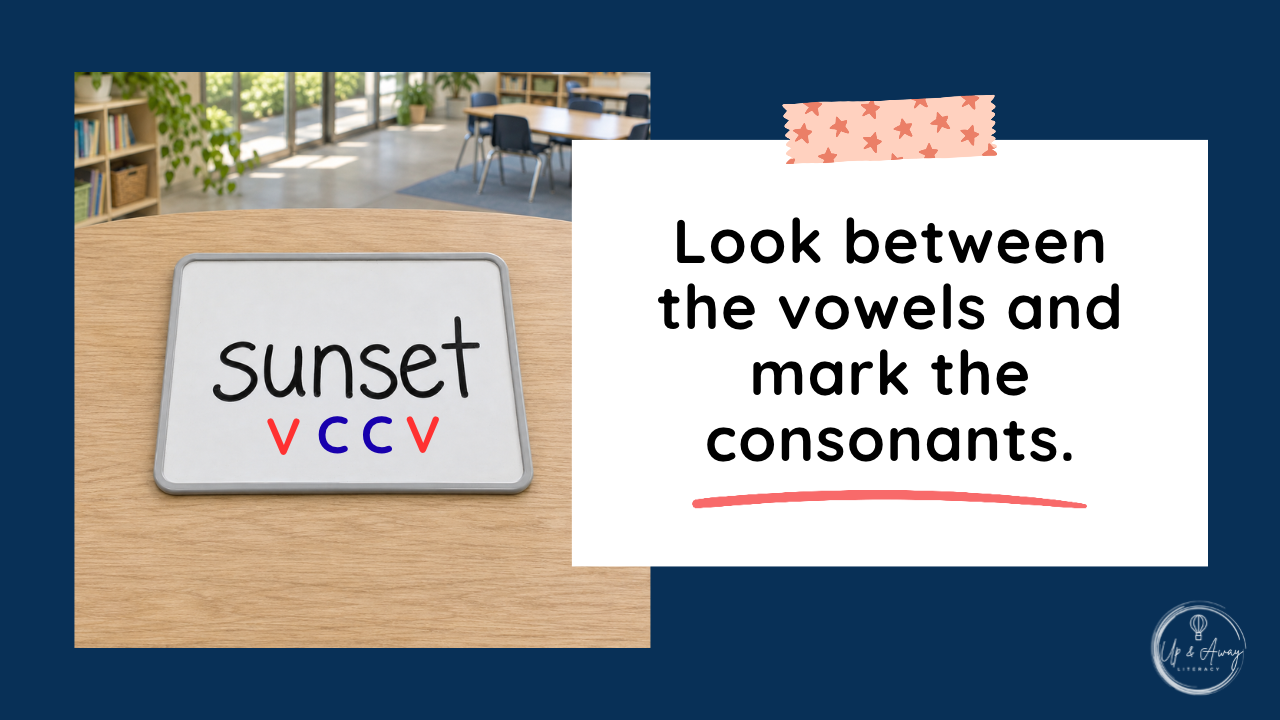
2. Look between the vowels and mark the consonants.
Point to n and s.
“There are two consonants between the vowels. I'm going to mark those consonants with a C."
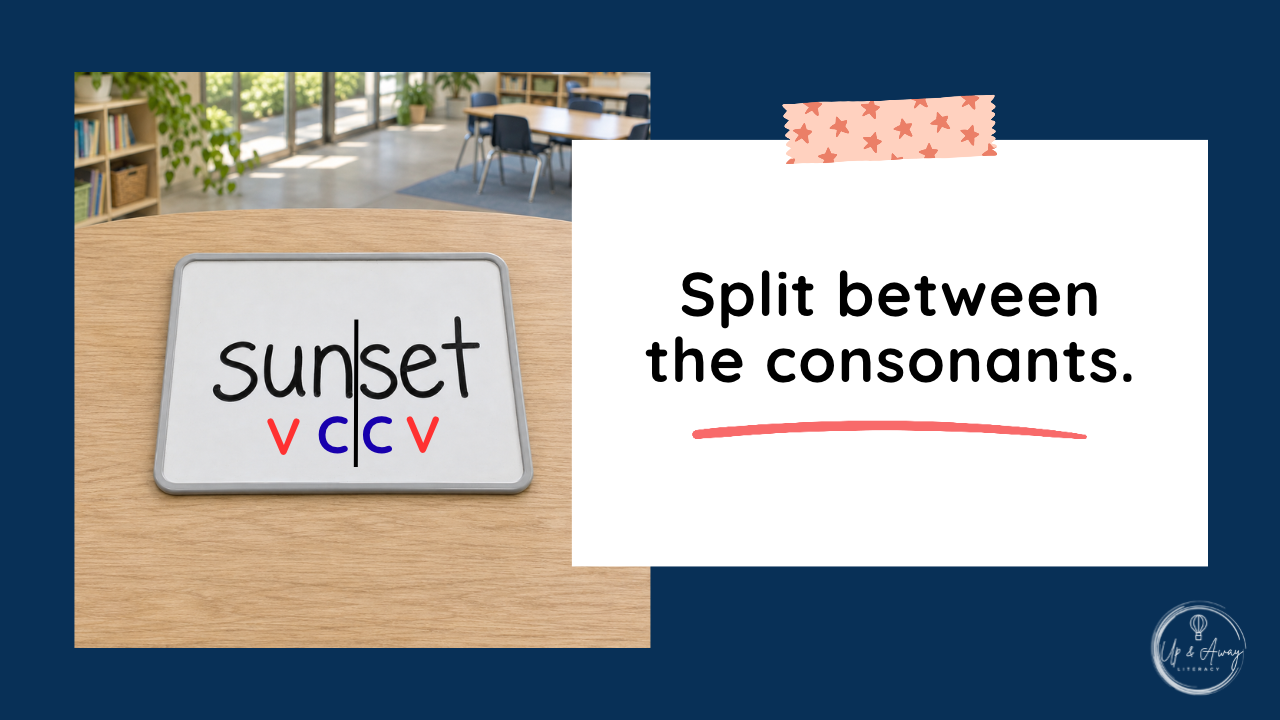
3. Split between the consonants.
Show students how this word has a VCCV pattern. Teach them that whenever a word has two vowels spread apart, and two consonants in between, we split the syllables between the consonants.
"Let’s draw a line and divide between the consonants.”
Mark the division.
sun / set
4. Read each syllable.
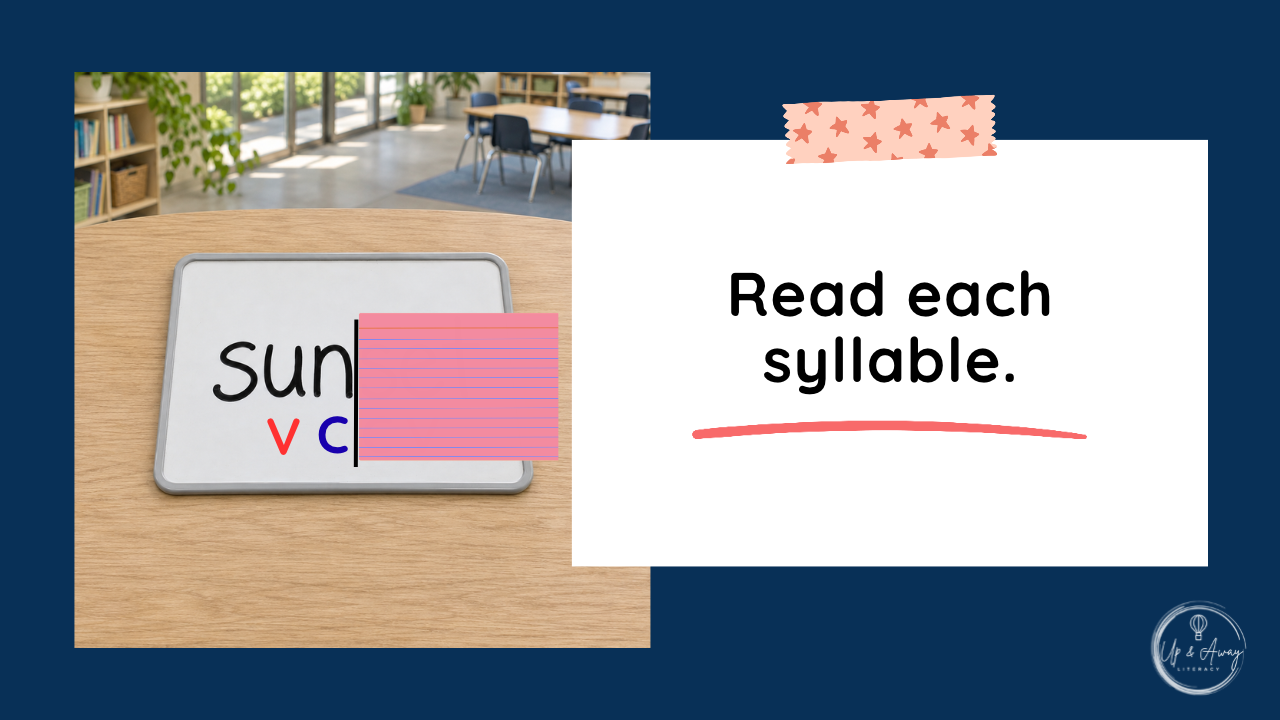
Point to sun and have students blend it. Then do the same with set.
Use the same blending support you would use with a CVC word. If needed, you can use an index card to cover one syllable at a time to make it easier to focus on each syllable.
5. Read the whole word.
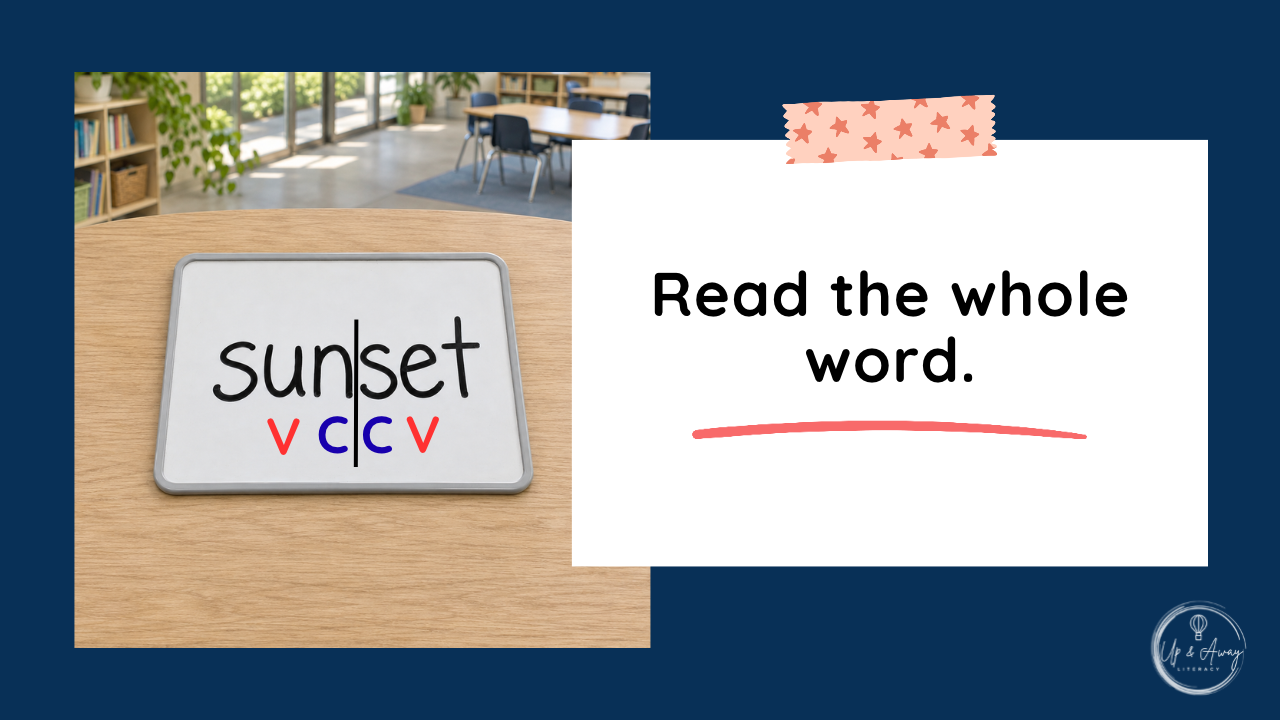
Sweep your finger under the whole word.
“Sun…set. Sunset!”
Then briefly connect the word to its meaning.
“A sunset is what we see in the sky when the sun is setting."
After students read the parts, always have them return to the whole word.
Gradually Let Students Do More
At first, you might mark the division yourself and ask students to read the two parts.
Next, have them help you find the vowels and decide where to try the split.
As the routine becomes familiar, let students take more responsibility for the steps.
If a student gets stuck, notice where the difficulty happens. Do they need help locating where the syllables split? Blending one syllable? Holding the first syllable in memory while reading the second?
That tells you where to offer support.
Some students will need several demonstrations and repeated practice. Others may surprise you with how quickly they make the connection.
Coming Up Next
Once students can decode CVC words, carefully chosen VCCV words give them an opportunity to use those familiar skills in longer words. Start small, model the process, and give students plenty of practice reading each syllable and blending the whole word.
In the next post in this series, we’ll move into VCCCV syllable division. We’ll look at what to do when there are three consonants between the vowels, how blends and digraphs help us decide where to divide, and how to guide students through words like pumpkin and pilgrim.
Stay In-The-Know!
New tips, courses, and resources delivered straight to your inbox. Sign up for my email list below so you don't miss a thing!
