
The Tricky Word Parking Lot: A Simple Routine to Build Word Curiosity
You know those random few minutes that pop up during the school day?
You finish a lesson earlier than expected. You're waiting to line up for lunch. There are five minutes before specials. Your next group isn't quite ready to transition.
It's not really enough time to start something new...but it's just enough time for a quick literacy routine.
Enter: The Tricky Word Parking Lot. 🚗
This simple classroom routine gives students a place to collect interesting or tricky words they encounter throughout the day—and gives you a ready-made activity whenever you have a few extra minutes to fill.
But the best part?
It encourages students to become curious about how words work.
What Is a Tricky Word Parking Lot?
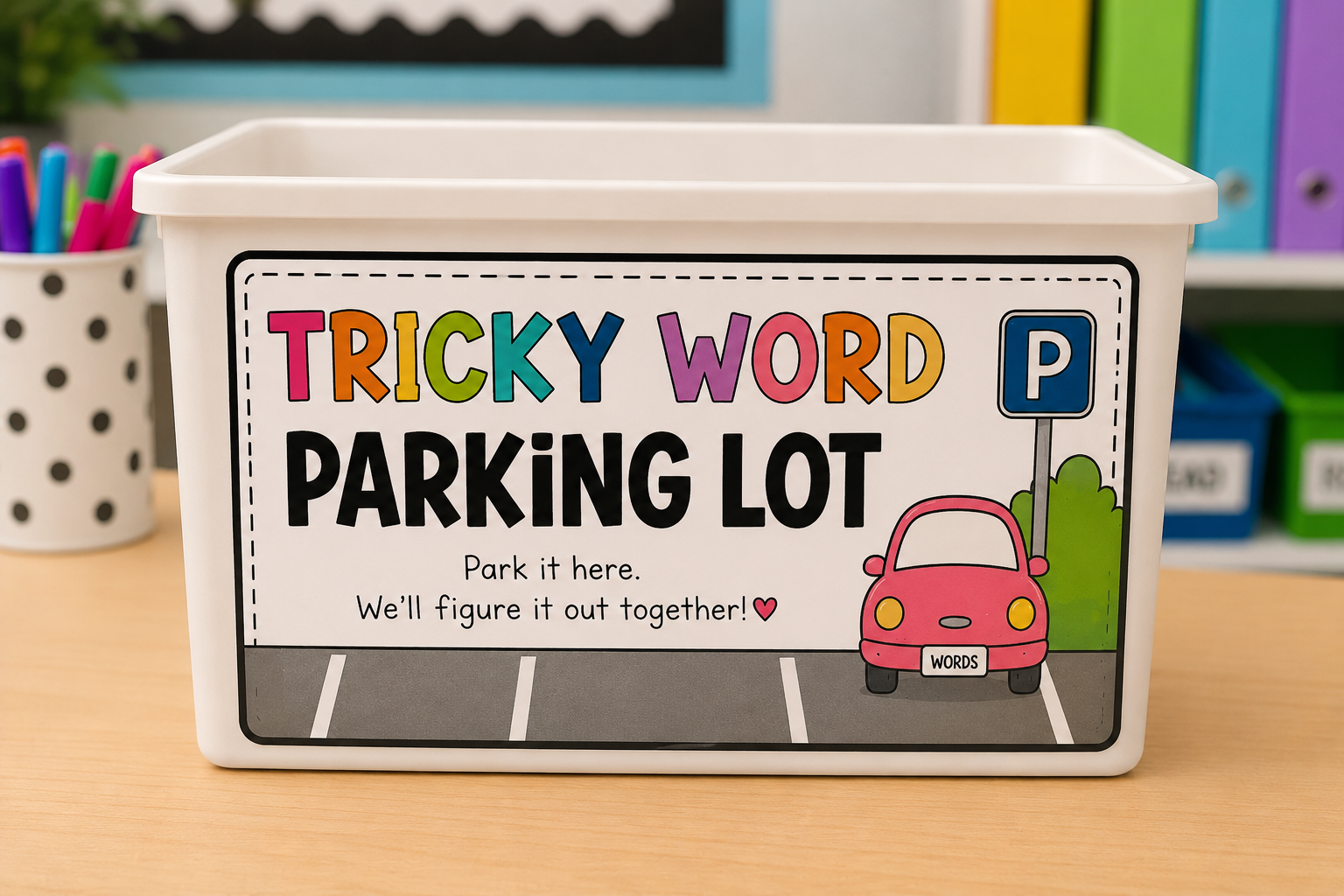
A Tricky Word Parking Lot is simply a box, basket, or container where students can "park" words they'd like to investigate.
Maybe a student encounters a word while reading that they aren't sure how to decode. Maybe they notice an unexpected spelling. Maybe they can read the word, but they're curious about why it's spelled that way.
Or maybe the word contains a phonics pattern you haven't taught yet.
Instead of quickly explaining the word and moving on, encourage students to park it!
Students write the word on a Tricky Word Parking Ticket and drop it into the classroom parking lot.
Then, when you have a few extra minutes later in the day, pull out a ticket and investigate the word together.
How to Set Up Your Tricky Word Parking Lot
This routine is intentionally simple. You don't need another complicated system to manage!
Choose a small box, basket, or container and attach the Tricky Word Parking Lot sign to the front.
Place the parking tickets somewhere students can easily access.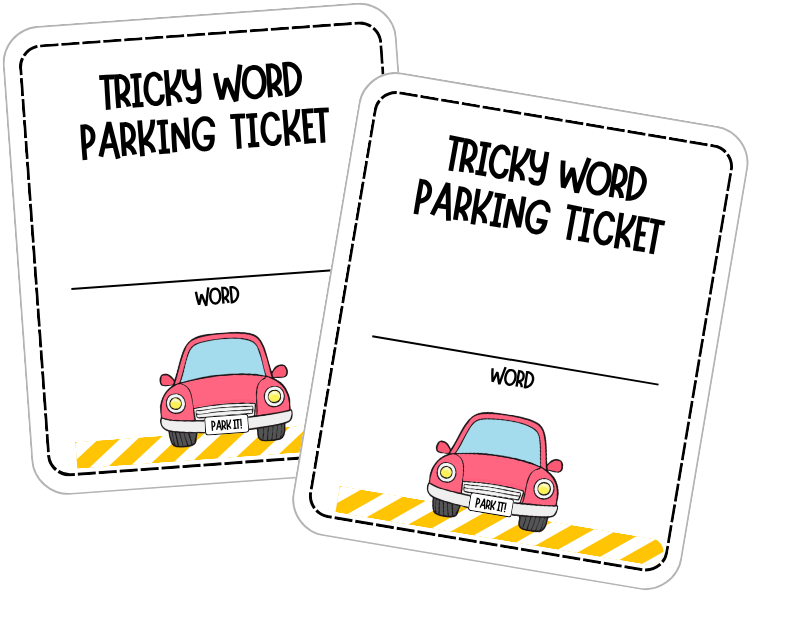 Then introduce the routine to your class:
"Sometimes we're going to find words that make us stop and think. We might not know how to read part of the word yet. We might notice a spelling that doesn't make sense to us. Instead of forgetting about that word, we're going to park it so we can investigate it later!"
As students encounter interesting words throughout the day, they can write them on a ticket and place them in the box.
Your parking lot will start filling up with words that came directly from your students' reading, writing, questions, and observations.
What Do You Do With the Words?
This is where the fun begins. When you have a few spare minutes, pull one parking ticket from the box. Write the word where everyone can see it and ask:
What can we figure out about this word?
Instead of immediately telling students what makes the word tricky, let them do some of the investigating.
Depending on the word and what your students have already learned, you might ask:
- What parts of this word can we already read?
- What sounds do we hear?
- How many phonemes are in the word?
- Which graphemes represent those sounds?
- Is there a phonics pattern we recognize?
- What part of the word is unexpected?
- Does it contain a pattern we haven't learned yet?
- Is there a part we need to remember by heart?
- Can we think of other words with a similar spelling?
- Do we notice anything else interesting about this word?
You certainly don't need to ask all of these questions every time. This isn't meant to become another full lesson. Sometimes you'll spend two minutes on a word. Sometimes a word will spark a much bigger conversation. Let the word—and your students' current knowledge—guide you.
Here's What This Might Look Like
Imagine a student adds the word said to the parking lot.
When you pull the ticket, rather than simply telling students that said is a tricky word they need to memorize, start by looking at what they can figure out.
Say the word and segment the sounds:
/s/ /ĕ/ /d/
Students can connect s with /s/ and d with /d/.
Then you can draw their attention to the middle of the word. The ai isn't representing the sound students might expect based on other words they've learned. In said, those letters are representing /ĕ/. That's the part of the word that needs some extra attention.
Suddenly, said isn't just a random word students have to memorize. Most of the word makes sense!
Or perhaps a student parks the word night before you've taught the igh spelling. Students may recognize the n and t but not yet have the knowledge needed to explain the middle of the word. That's a great opportunity to say:
"You noticed something we haven't learned yet!"
You can briefly introduce the spelling, or simply acknowledge it and tell students they'll learn more about it later. The goal isn't for students to know everything. It's for them to realize that words are worth investigating.
Why I Love This Routine
There are plenty of ways to squeeze a little extra phonics practice into the school day, but I especially love this one because the words aren't always chosen by the teacher. Students are doing the noticing. Over time, you may start hearing things like:
- "Wait! That's a tricky word!"
- "I know that part, but I don't know this part."
- "We learned that spelling!"
- "Can I put this word in the parking lot?"
And that is what we're after. We don't just want students who can complete a phonics activity. We want students who are curious about words—students who notice patterns, ask questions, make connections, and use what they've already learned to figure out something new.
One Important Reminder
A "tricky word" doesn't necessarily mean the entire word is irregular. In fact, that's an important part of this routine. When you investigate a word, start with:
What DO we know?
Help students identify the regular, decodable parts of the word before focusing on what's unexpected or unfamiliar. Sometimes the "tricky" part is an irregular spelling. Sometimes it's simply a phonics concept students haven't been taught yet. And sometimes, after looking closely, students may realize the word isn't as tricky as they originally thought!
That process helps move students away from thinking of unfamiliar words as things they simply have to memorize. Instead, we're teaching them to approach unfamiliar words with curiosity:
What do I know? What can I figure out? What do I still need to learn?
That's a mindset that extends far beyond one little classroom parking lot.
Grab the FREE Tricky Word Parking Lot Printable 🚗
Want to try this routine with your students? I've created a FREE Tricky Word Parking Lot printable that makes it easy to get started. This free download is part of my Free Resource Library for teachers... click the link below to get instant access!
You'll get:
- A Tricky Word Parking Lot sign to attach to a box, basket, or container
- Printable Tricky Word Parking Tickets for students to record the words they discover
- Simple teacher directions for using the routine in your classroom
>> GRAB THE FREE TRICKY WORD PARKING LOT <<
Print it, set up your parking lot, and encourage your students to start noticing interesting words. The next time you find yourself with three extra minutes before lunch? Pull a ticket and investigate a word together. 🚗🔎
Stay in-the-know!
New tips, courses, and resources delivered straight to your inbox. Sign up for our email list below so you don't miss a thing!
