

What Is Orton-Gillingham? A Parent-Friendly Guide to Understanding the OG Approach
If you’ve been researching reading support for your child, chances are you’ve come across the term Orton-Gillingham.
Maybe a tutor mentioned it.
Maybe your child’s school recommended it.
Or maybe you’ve seen parents online talking about how much it helped their struggling reader.
But what exactly is Orton-Gillingham… and how do you know whether a tutor is truly trained in it?
Let’s break it down in a simple, parent-friendly way.
The History of Orton Gillingham
The Orton-Gillingham approach dates back to the 1930s and was developed by two pioneers in the field of reading and dyslexia: Samuel Orton and Anna Gillingham.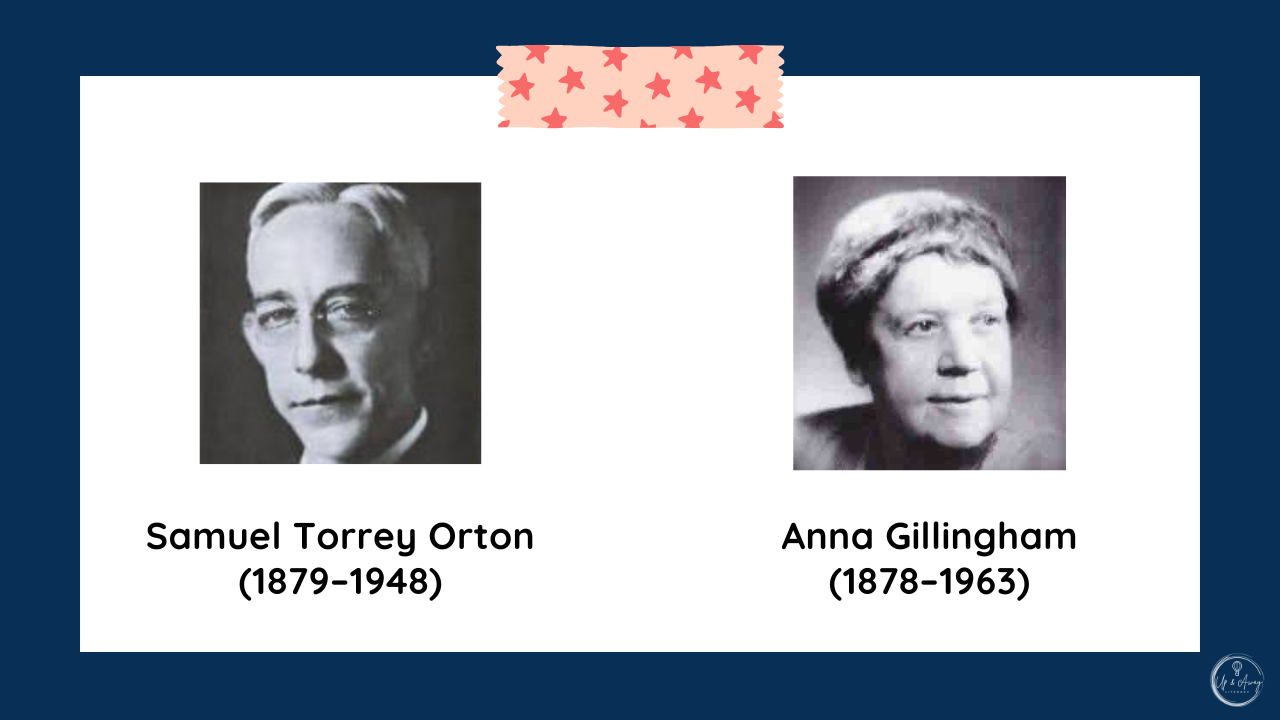
Dr. Orton was a neurologist who studied children with reading difficulties and dyslexia. He noticed that many struggling readers needed reading taught in a much more direct, structured way than was common at the time. Anna Gillingham, an educator and psychologist, worked alongside him to organize and develop teaching methods that could help these students succeed.
Together, they created a structured, multisensory approach to reading instruction that focused on explicitly teaching how sounds and letters work together. Their work became one of the foundations of what we now call structured literacy.
Even though the approach was developed nearly 100 years ago, the core principles of Orton-Gillingham are still widely used today because they align so closely with what research tells us about how children learn to read best—especially struggling readers and students with dyslexia.
What Is the Orton-Gillingham Approach?
Orton-Gillingham (often shortened to “OG”) is a structured, research-based approach to teaching reading.
It was originally developed to help students with dyslexia, but it can benefit any child who struggles with reading, spelling, and writing.
Unlike approaches that expect children to naturally “pick up” reading skills over time, Orton-Gillingham teaches reading in a very direct and systematic way.
That means:
-
Skills are taught step by step
-
Students explicitly learn how sounds and letters work together
-
Lessons follow a clear sequence
-
Previously learned skills are continuously reviewed
Instead of guessing words or relying heavily on pictures, students are taught how reading actually works.
What Makes Orton-Gillingham Different?
There are a few key features that make Orton-Gillingham unique.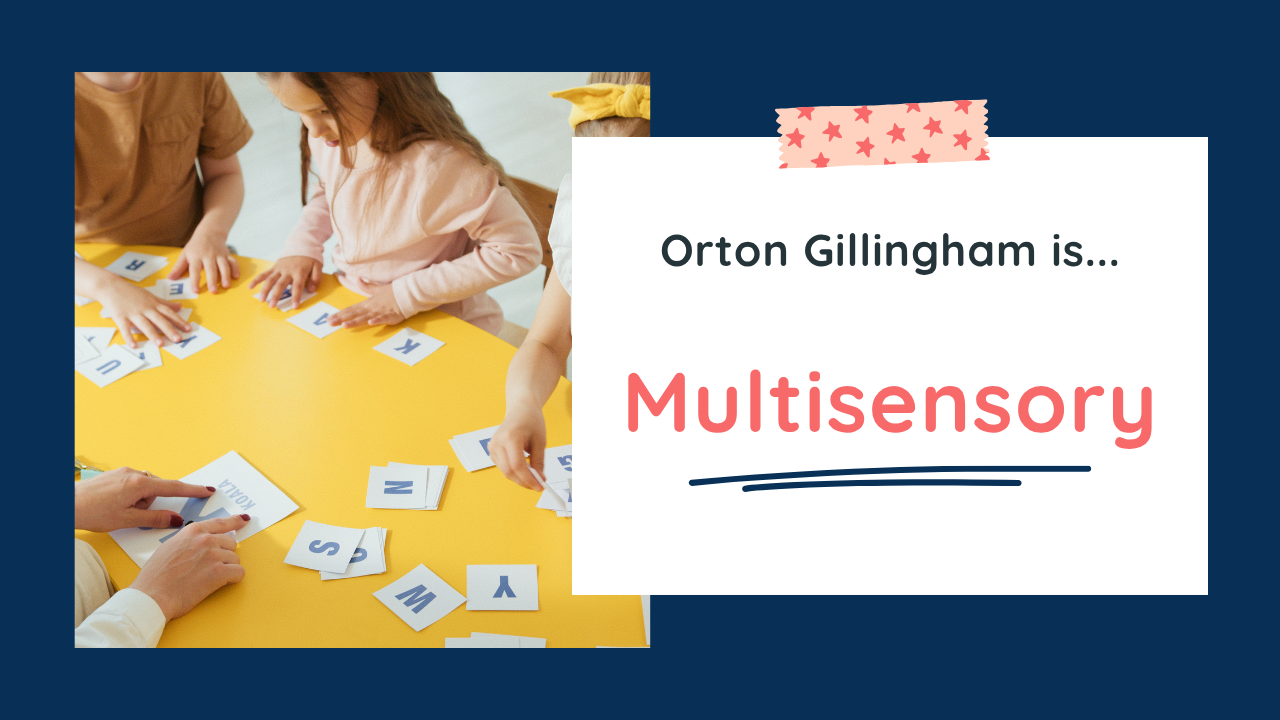
One of the most well-known parts of Orton-Gillingham is its multisensory approach.
This means children learn using multiple pathways at the same time.
They may:
-
See the letters
-
Say the sounds
-
Hear the sounds
-
Write the letters
-
Tap or trace as they learn
This enables them to make specific links and connections between information that is auditory (what they hear), visual (what they see), and kinesthetic (what they say and write). The Orton Gillingham approach refers to these multisensory links as the language triangle.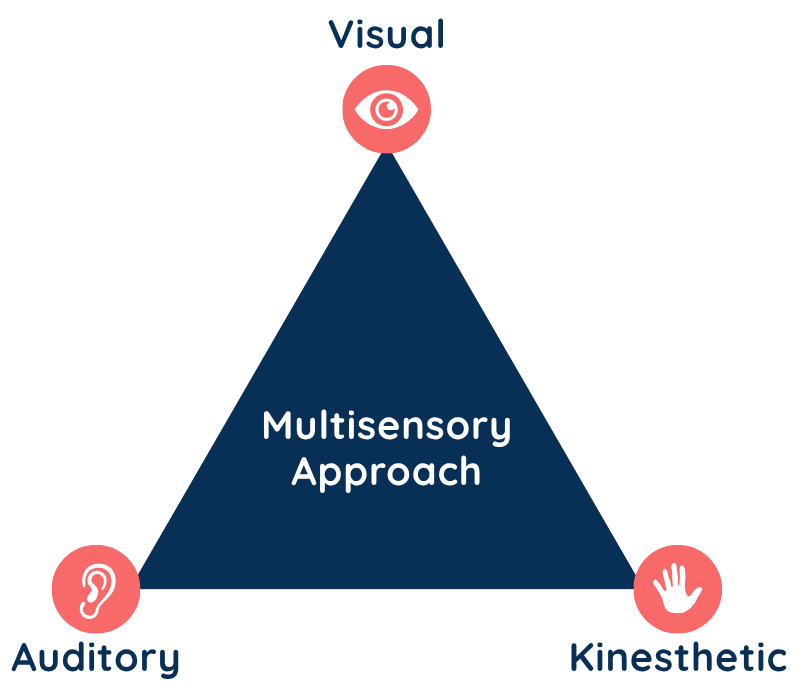
Using multiple senses strengthens memory and helps students better retain what they’re learning. For many struggling readers, this makes a huge difference.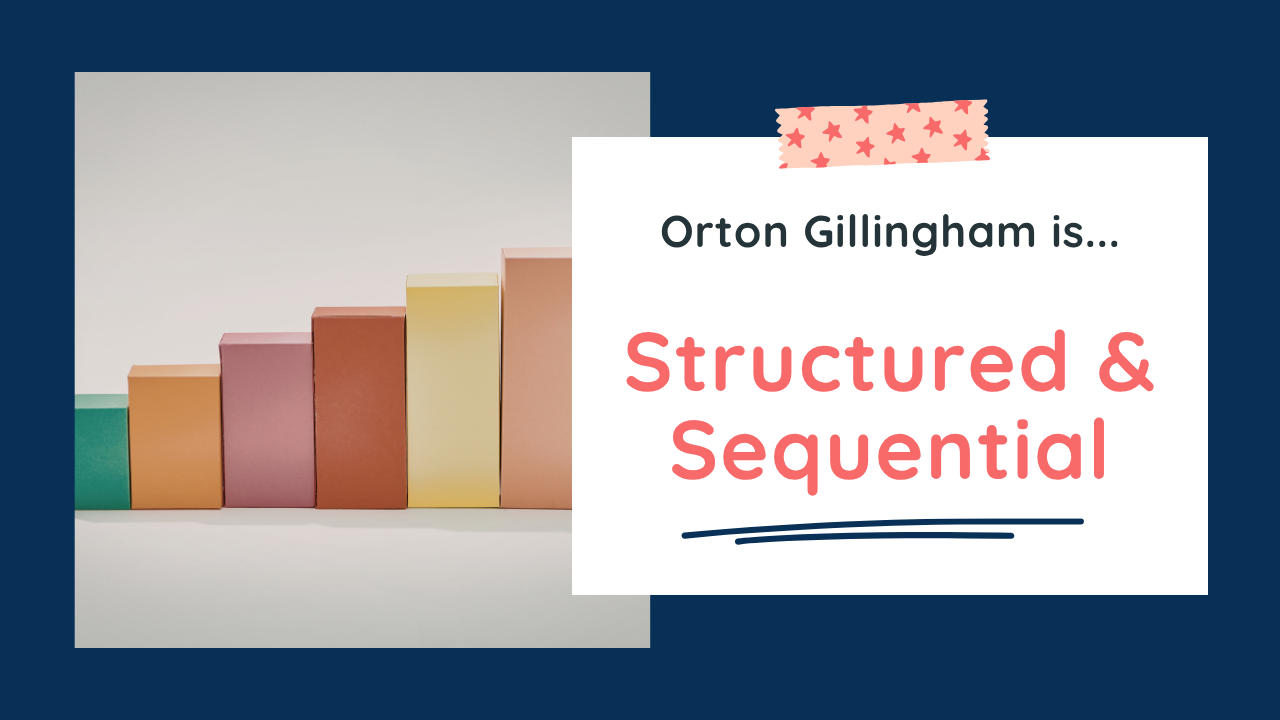
OG instruction follows a carefully planned sequence.
Children don’t jump randomly from skill to skill. Instead, they build a strong foundation before moving to more advanced concepts.
Students start with basic skills—like letter sounds and simple word patterns—before progressing to more advanced concepts such as vowel teams, syllable types, morphology, and multisyllabic words.
Lessons are intentionally planned so that students are not introduced to skills before they are ready. This structured sequence helps reduce overwhelm, supports mastery, and allows struggling readers to build confidence step by step as their knowledge continues to grow.
One of the biggest strengths of Orton-Gillingham instruction is that it is explicit. This means skills are directly taught to students instead of expecting them to figure things out on their own.
In an OG lesson, concepts are clearly explained, modeled, practiced together, and then practiced independently.
Students are taught:
- how sounds connect to letters
- how words are structured
- how to apply patterns when reading and spelling
Nothing is left to guessing or chance.
For struggling readers—especially those with dyslexia—this kind of clear, direct instruction is incredibly important because it removes confusion and gives students the tools and confidence they need to become successful readers.
Another important feature of Orton-Gillingham instruction is that it is cumulative.
Skills are taught in a carefully planned sequence, with each new concept building upon previously learned skills.
But students don’t simply learn a skill once and move on forever—OG lessons constantly circle back to review and reinforce older concepts while introducing new ones.
This ongoing review helps strengthen memory, increase automaticity, and prevent learning gaps from forming over time. For struggling readers, this can be incredibly powerful because it gives them repeated opportunities to practice and truly master skills instead of feeling rushed through them.
A trained Orton-Gillingham instructor doesn’t just follow a script.
They constantly observe how a child is responding and adjust instruction based on:
-
Errors
-
Mastery
-
Pacing
-
Confidence
-
Areas of difficulty
This means lessons are tailored to the child—not just pulled from a generic program.
Who Is Orton-Gillingham Helpful For?
OG instruction is especially beneficial for:
-
Students with dyslexia
-
Children who struggle with phonics
-
Students who guess at words
-
Children who have difficulty spelling
-
Readers who lack confidence
-
Students who need more repetition and structure
Even children without a dyslexia diagnosis may benefit from structured literacy instruction if reading is challenging and doesn't come easily.
How Do I Know If a Tutor Is Truly Trained in Orton-Gillingham?
This is one of the most important questions parents can ask.
Because Orton-Gillingham is widely respected, many tutors use phrases like:
-
“OG-trained”
-
“based on Orton-Gillingham”
-
“multisensory reading instruction”
But not all tutors have completed formal training.
Here are a few things to look for:
Look for Formal Training
To verify if a tutor is Orton-Gillingham (OG) certified, ask for their certification level from accredited organizations.
Some well-known organizations that provide or accredit Orton-Gillingham and structured literacy training include the Orton-Gillingham Academy (OGA), the International Dyslexia Association (IDA), and International Multisensory Structured Language Education Council (IMSLEC).
These organizations help ensure that tutors have received extensive coursework, supervised practice, and training in evidence-based reading instruction. A qualified tutor should be able to clearly explain their credentials, the training they’ve completed, and how they use structured literacy methods to support struggling readers.
Ask About Certifications
True certification requires a supervised practicum, not just a 30-hour workshop, with levels typically including Associate or Certified.
You may see credentials such as:
-
Certified Academic Language Practitioner (CALP)
-
Structured Literacy Dyslexia Interventionist (SLDI)
-
Certified Orton-Gillingham Tutor
Ask How Lessons Are Structured
A trained tutor should be able to clearly explain:
-
What skills are being taught
-
Why those skills matter
-
How lessons are sequenced
-
How they monitor progress
If the instruction sounds random or worksheet-heavy, that can be a red flag.
Don’t Be Afraid to Ask Questions
It is completely okay to ask:
-
“What training have you completed?”
-
“How do you structure lessons?”
-
“How do you know when my child is ready for the next skill?”
A knowledgeable tutor should welcome these questions.
Why Structured Literacy Matters
Many struggling readers are incredibly bright children who simply need reading taught in a more explicit way.
When instruction is systematic, structured, and tailored to the child, students often begin to:
-
Gain confidence
-
Stop guessing
-
Improve fluency
-
Strengthen spelling
-
Feel more successful as readers
And that confidence can change everything.
Final Thoughts
Finding reading support for your child can feel overwhelming—especially when there are so many programs and buzzwords online.
But understanding the basics of Orton Gillingham can help you make informed decisions and feel more confident when choosing support for your child.
At the end of the day, the goal is simple:
Helping children become confident, capable readers through instruction that truly meets their needs.
Stay in-the-know!
New tips, courses, and resources delivered straight to your inbox. Sign up for our email list below so you don't miss a thing!
