

What to Ask at a Parent-Teacher Conference About Reading
Parent-teacher conferences are a great opportunity to learn more about how your child is doing in school. But if your child is struggling with reading, you may walk into that conference with a lot more than a few questions.
Is my child behind? What exactly are they struggling with? Should I be doing more at home? What should we even be practicing?
It can be hard to know what to ask, especially when you only have a short amount of time with your child’s teacher.
The good news? You don’t need to know all of the reading terminology or have all the answers. A few specific questions can help you leave the conference with a much clearer picture of your child’s reading development and a plan for how you can support them at home.
Start With What Your Child Is Doing Well
When you’re worried about your child’s reading, it’s easy to jump straight to what they can’t do yet. But start the conversation by asking about their strengths.
Try asking:
- What reading skills are strongest right now?
- Which reading skills are currently on grade level?
- What have you noticed my child making progress with?
This gives you a more complete picture of your child as a reader—and helps you identify the skills you can continue building on.
Ask Specifically About Areas for Growth
Next, find out exactly where your child is having difficulty.
Instead of simply asking, “Is my child behind in reading?”, ask questions that give you more specific information.
For example:
- Which reading skills need the most practice right now?
- Is my child struggling more with decoding, fluency, or comprehension?
- Are there specific phonics skills my child hasn't mastered yet?
- What should we focus on first?
That last question is especially important.
If your child needs help in several areas, it can be tempting to try to work on everything. Instead, ask the teacher which skill should be the priority right now.
Ask About Reading Assessments and Progress
Your child’s teacher likely has more information than what appears on a report card.
Ask:
- How is my child performing on grade-level reading assessments?
- Is my child currently meeting grade-level expectations?
- What assessments are being used to measure reading progress?
- How has my child progressed since the beginning of the year?
- How will we know if the extra support is working?
You don't need to understand every score or assessment name. If something isn't clear, ask the teacher to explain what the results mean for your child as a reader.
One of the most helpful questions can simply be:
“Can you show me an example of what you’re seeing?”
Seeing an actual reading passage, assessment, writing sample, or word-reading task can make the information much easier to understand.
Find Out What to Practice at Home

This is the big one!
Many parents leave conferences knowing that their child needs “more reading practice,” but without knowing what that practice should actually look like.
Be specific. Ask:
- What skills should we be practicing at home right now?
- Can you give me a few examples of words or skills we should practice?
- What activities would you recommend at home?
- How much time should we spend practicing?
- Is there anything you don't want us working on yet?
The goal isn't to recreate school at your kitchen table. You want a small, manageable focus that gives your child meaningful practice with the skills they actually need.
Share What You're Seeing at Home, Too
A parent-teacher conference shouldn't be a one-way conversation.
You see your child in a completely different setting, so what you're noticing at home can give the teacher valuable information.

Maybe your child:
- avoids reading whenever possible,
- guesses at unfamiliar words,
- becomes frustrated quickly,
- can read words but doesn't seem to understand what they read,
- struggles to remember words they've practiced before, or
- reads very slowly and has to work hard to figure out each word.
Share those observations.
You don't need to diagnose the problem. Simply explain what you're noticing.
For example: “When we read at home, I've noticed that she looks at the first letter and then guesses the rest of the word. Is that something you're seeing at school, too?”
That kind of specific information can lead to a much more productive conversation.
You Don't Have to Wait Until the Next Conference
The conversation about reading doesn't have to end when the conference does.
If your child is struggling, stay in communication with their teacher. A short email or check-in can help you make sure everyone is still working toward the same goals.
You might ask:
“We've been practicing ___ at home for the past few weeks. Are you noticing any improvement at school?”
That helps create consistency between home and school—and lets you adjust what you're doing if your child's needs change.
Grab the Free Parent-Teacher Conference Notes Printable
Want to bring these questions with you?
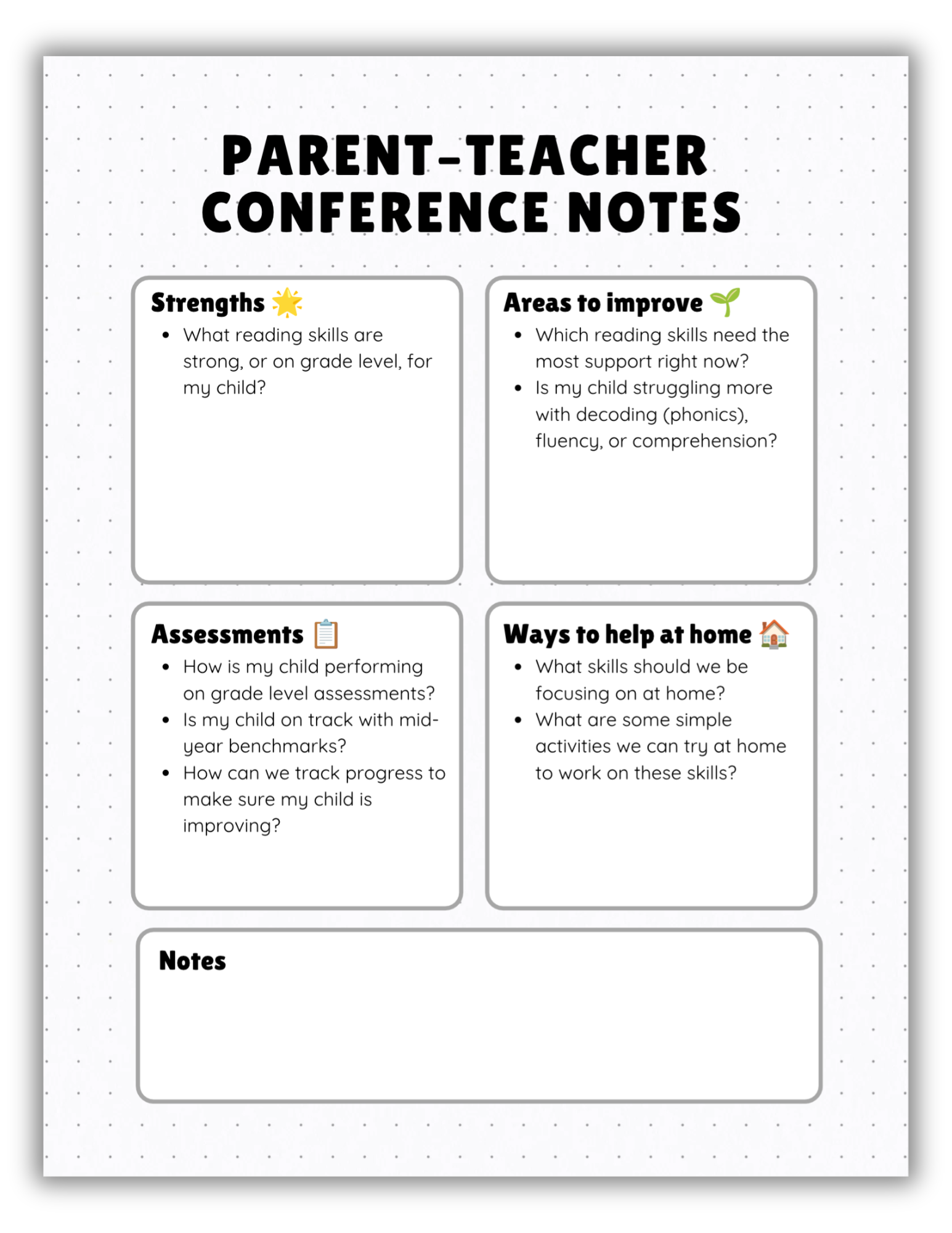
I've created a free Parent-Teacher Conference Notes printable that gives you space to record your child's:
⭐ Strengths
🌱 Areas to improve
📋 Assessment information
🏠 Ways to help at home
📝 Notes and next steps
You can print it before your conference and jot down answers as you talk, so you don't have to rely on remembering everything afterward.
[DOWNLOAD THE FREE PARENT-TEACHER CONFERENCE NOTES →]
Remember: You're on the Same Team
You and your child's teacher ultimately want the same thing: for your child to become a confident, capable reader.
You don't have to walk into a conference knowing all the right terminology or having all the answers. Ask questions. Take notes. Share what you're seeing at home. And leave with one or two clear next steps.
Those conversations can help you better understand your child's needs—and make the reading practice you do at home much more purposeful.
Ready to Turn Those Conference Notes into a Reading Plan?
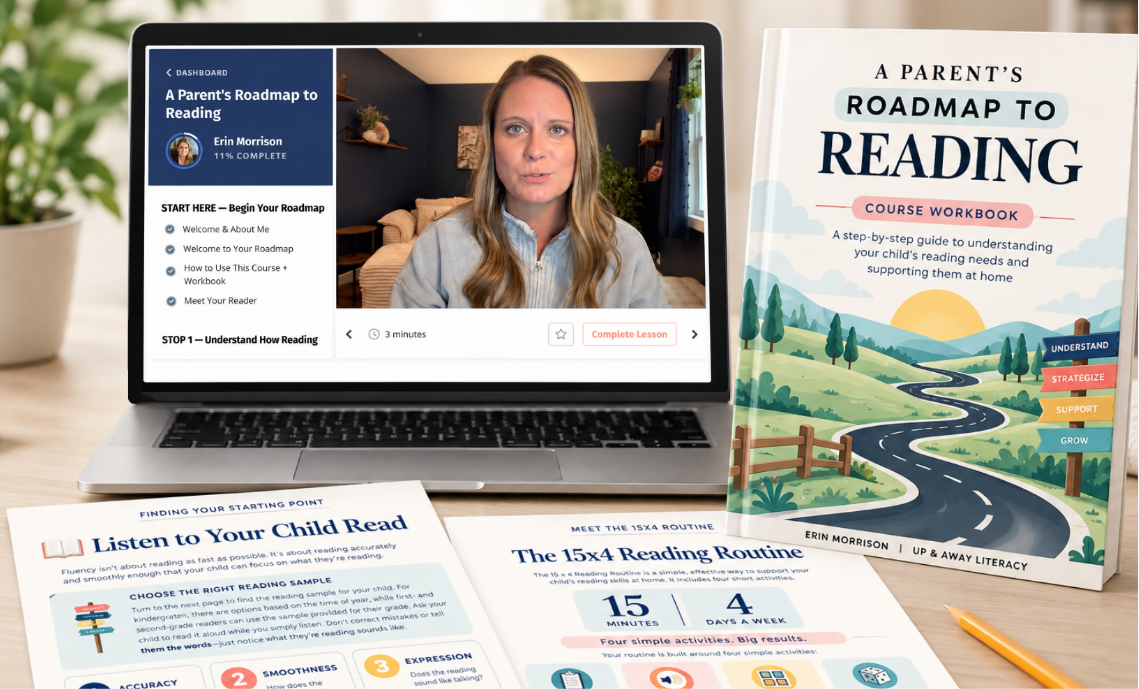
If you left your conference knowing what your child needs to work on but still wondering how to help, I created A Parent’s Roadmap to Reading for you. In this online course, I’ll show you how to choose activities that match the skill your child needs and build a simple routine you can do at home in 15 minutes, 4 days a week.

Stay In-The-Know!
New tips, courses, and resources delivered straight to your inbox. Sign up for my email list below so you don't miss a thing!
