
7 Prompts to Use When Your Reader is Stuck on a Word
There’s a moment every parent and teacher knows well: your child or student hits a tricky word… and everything just stops.
They look at you. You look at them.
Do you jump in and tell them? Wait it out? Give a hint?
If you’ve ever felt unsure in that moment—you’re not alone. The good news is, there’s a simple progression you can follow that supports your reader without taking over the work for them.
Let’s walk through exactly what to say (and why it works).
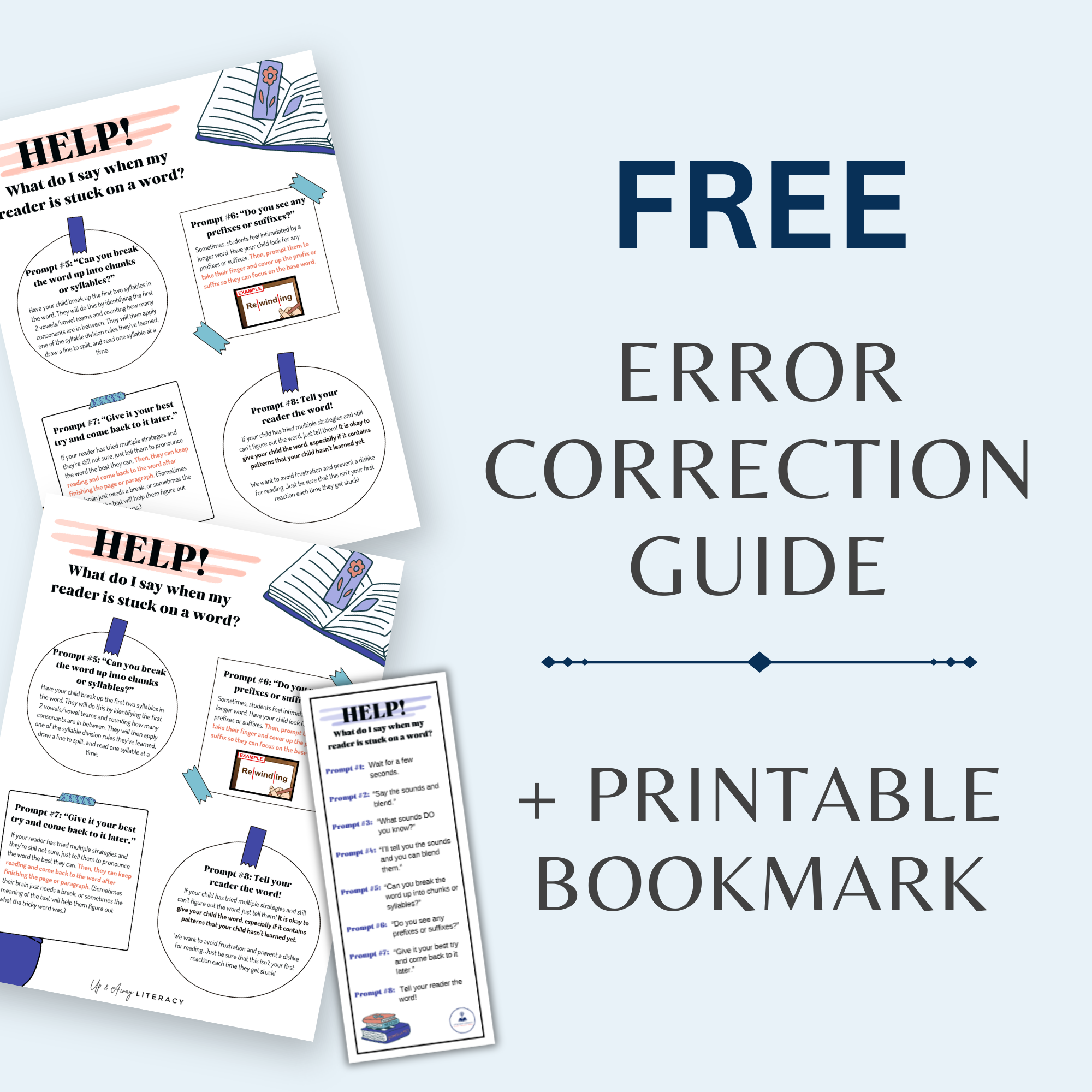
And, if you want to download a free guide of these 7 prompts, click the image below!
Start Here: Give Them a Moment
Before saying anything, pause.
It might feel uncomfortable, but a few seconds of silence gives your reader a chance to try something on their own. This is called productive struggle, and it’s incredibly valuable for building independence.
You might be surprised... many kids will figure it out if we just give them a beat.
If they’re still stuck after a few seconds, that’s your cue to step in.
Prompt #1: “Say the sounds and blend.”
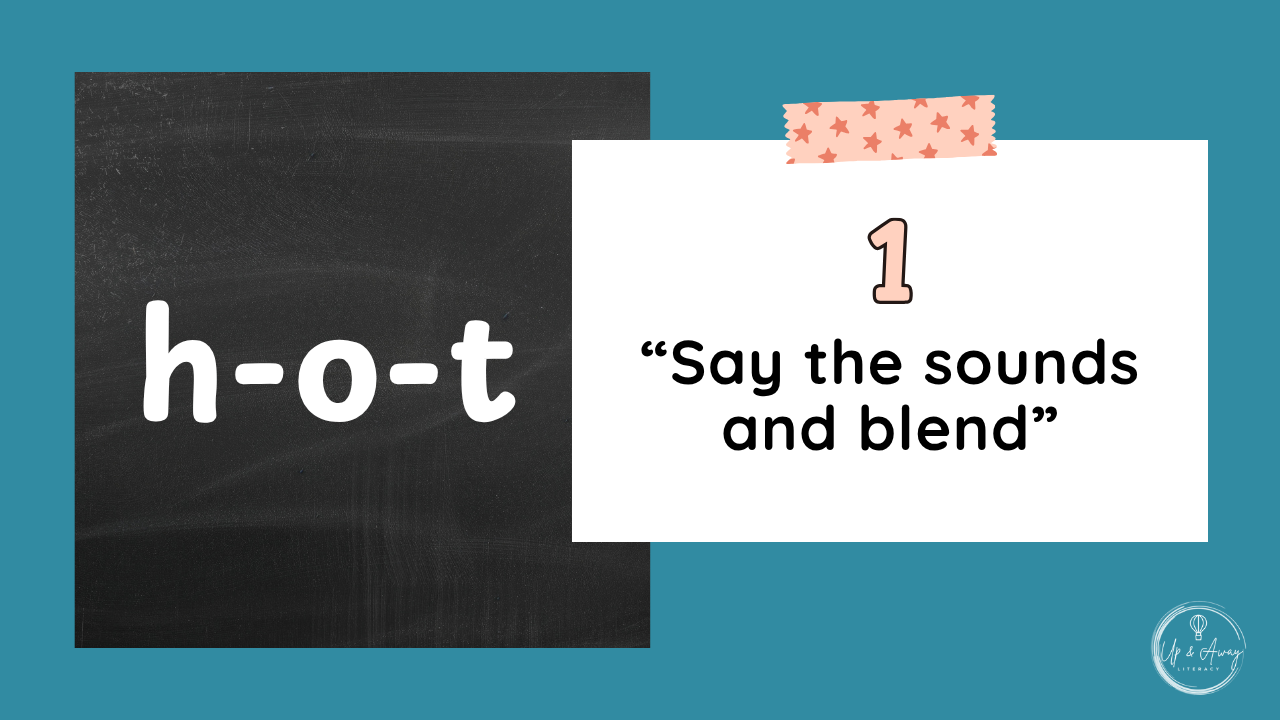
If the word contains phonics patterns your reader already knows, guide your child to use them.
You can say:
-
“Say the sounds and blend.”
-
“Sound it out.”
Encourage them to:
-
Start at the beginning
-
Say each sound
-
Blend the sounds back together
Note: If the word includes patterns they haven’t learned yet, skip this and move to the next prompt.
Prompt #2: “What sounds DO you know?”

Sometimes a word feels overwhelming because of just one unfamiliar part.
Instead of focusing on what they don’t know, shift the focus:
-
“What sounds DO you know in this word?”
For example, if the word is wait, you might guide them to:
-
Identify the /w/ at the beginning
-
Recognize the /t/ at the end
-
Then support them with the vowel team “ai”
This keeps them engaged in problem-solving while still offering support.
Prompt #3: “I’ll say the sounds—now you blend them.”
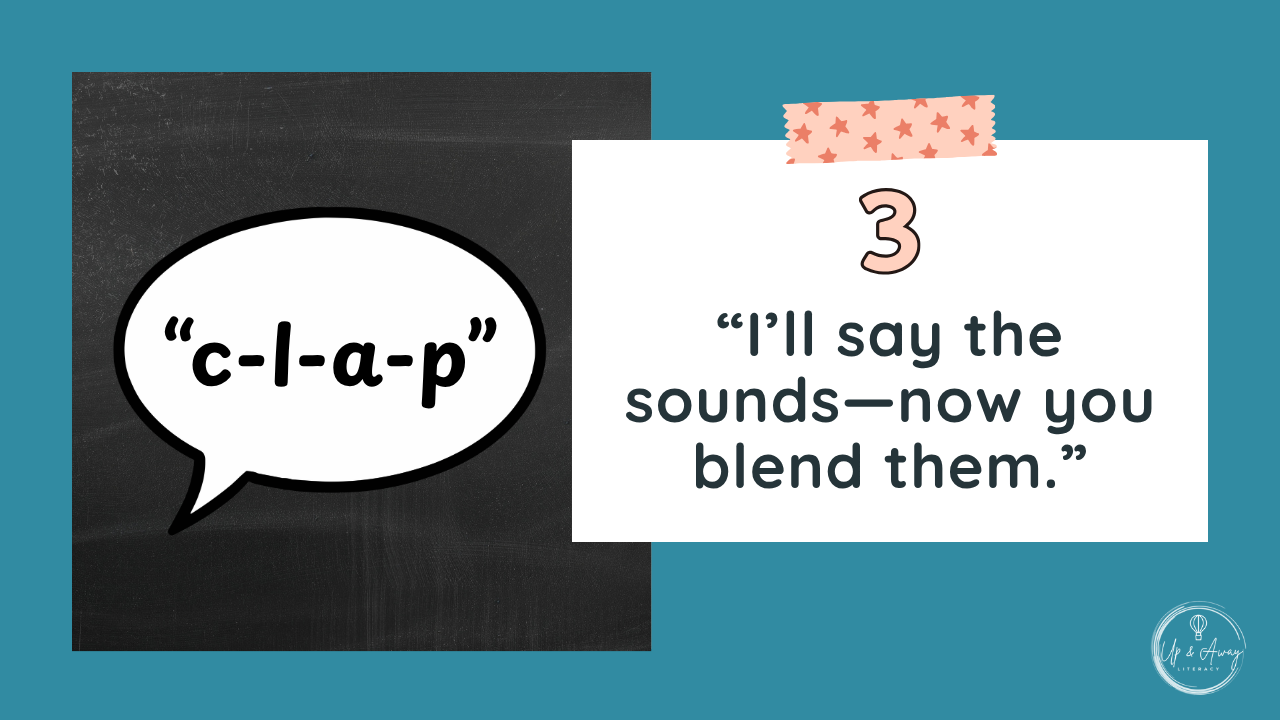
If your reader is still stuck, you can take on a bit more of the load—without giving away the whole word.
You say the sounds:
-
“/c/ /l/ /ă/ /p/”
Then prompt them:
-
“Now blend it together.”
This helps them practice blending, even if decoding every sound independently is still developing.
Tip: Point to each letter as you say the sounds to strengthen letter-sound connections.
Prompt #4: "Can you break the word up into chunks or syllables?"
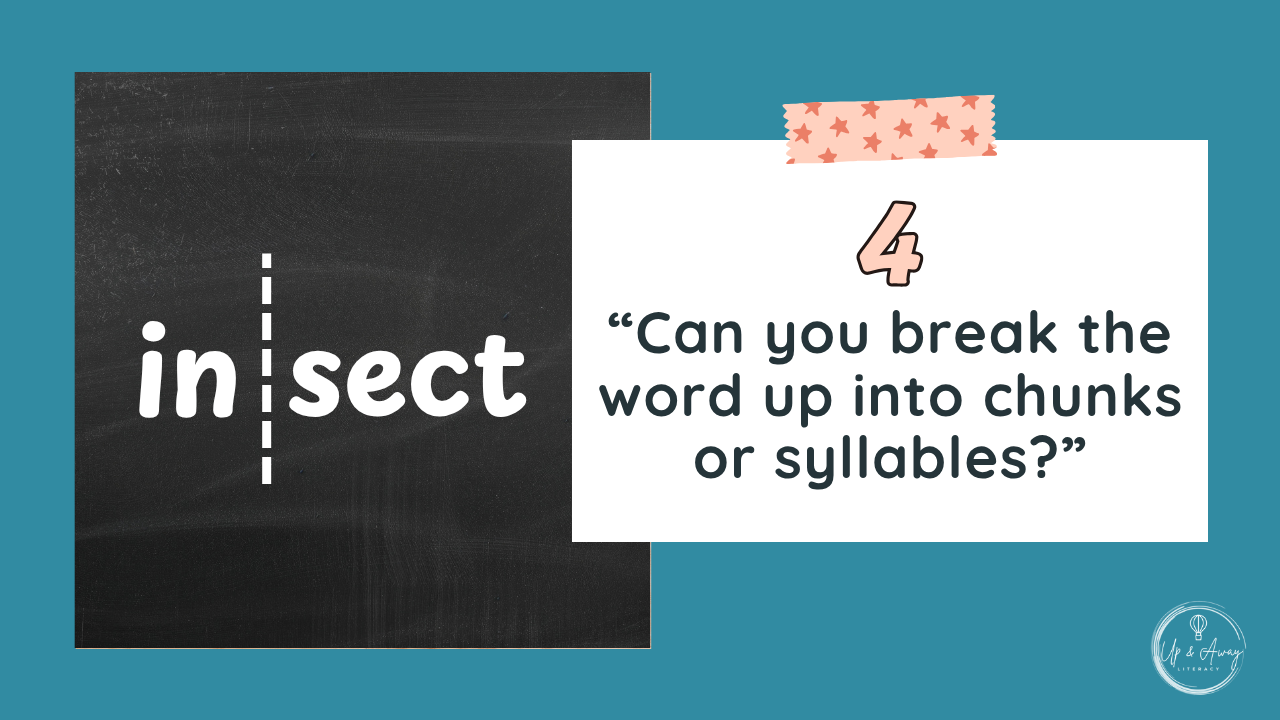
For longer words, zoom out.
You can say:
-
“Can you break the word into parts or syllables?”
Have your reader:
-
Look for vowel patterns
-
Split the word into chunks
-
Read one part at a time
This makes big words feel much more manageable.
Prompt #5: "Do you see any prefixes or suffixes?"
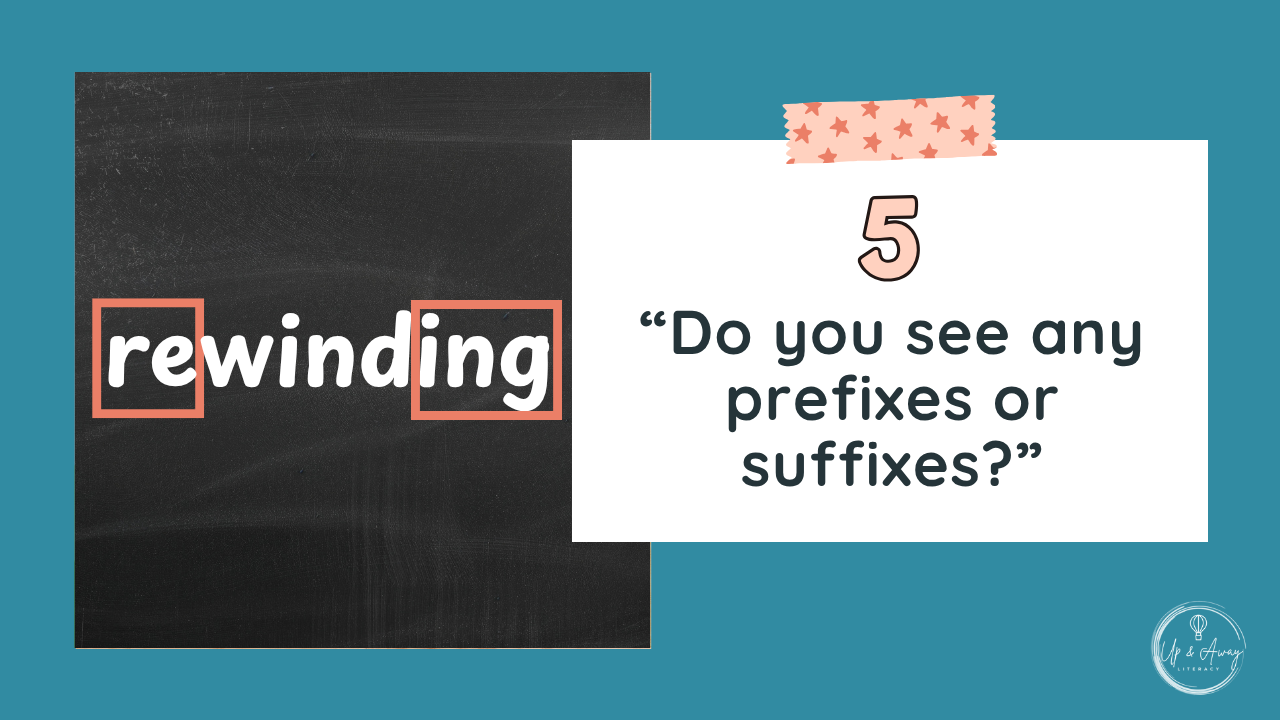
Another powerful strategy is to help your reader spot meaningful word parts.
Ask:
-
“Do you see a prefix or suffix?”
Then:
-
Cover the prefix or suffix
-
Focus on reading the base word first
For example:
-
rewinding → cover “re-” and “-ing” → read wind
This builds both decoding skills and word awareness.
Prompt #6: “Give it your best try and come back to it later.”
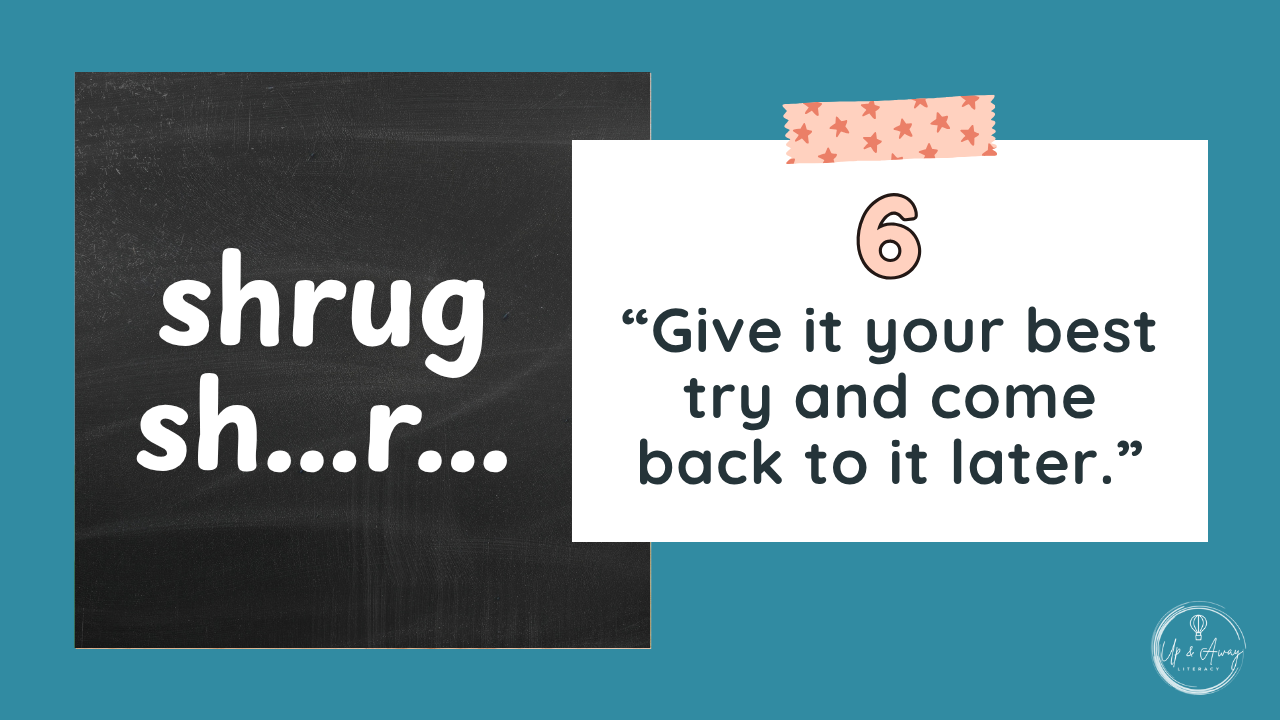
Sometimes the best move is to keep going.
You can say:
-
“Try it the best you can and keep reading—we’ll come back.”
This:
-
Keeps the flow of reading going
-
Reduces frustration
-
Allows context to support understanding later
Often, the meaning of the sentence helps the tricky word click on a second pass.
Prompt #7: Tell Them the Word (Yes, Really!)
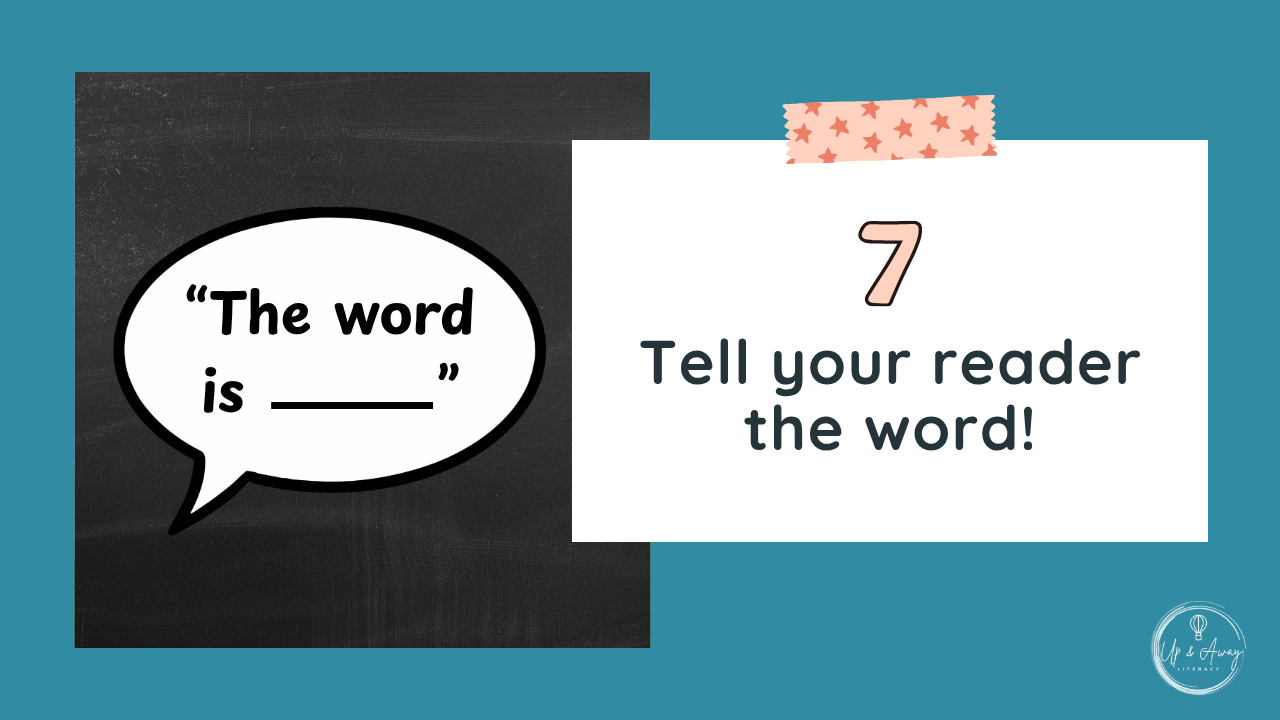
If your reader has tried multiple strategies and is still stuck... it’s okay to tell them the word.
In fact, sometimes it’s the best choice.
We never want a child to feel defeated or start to dislike reading because every word feels like a battle.
Just keep this in mind: Telling the word shouldn’t be your first move, but it’s absolutely a helpful tool when needed.
The Big Picture
When a child gets stuck, it’s not just about that one word. It’s about building confidence, problem-solving skills, and independence as a reader.
By moving through these prompts, you’re:
-
Supporting without rescuing
-
Teaching strategies instead of shortcuts
-
Helping your reader become more confident over time
And that moment of “I got it!”? That’s where the magic happens.
If you want to download a free guide of these 7 prompts, click the image below. Enjoy!
The Resources You Need, All in ONE Membership

I understand that purchasing resources one by one adds up fast—and as a teacher, I know every dollar matters. That’s why my K-2 membership, Launching Literacy, is a smarter and more cost effective option. This membership gives you everything you need for small group instruction—all in one place—so you can save time, money, and stress.
No more weekends wasted hunting for Science of Reading–aligned heart word resources, phonics lessons, and decodable texts. With Launching Literacy, you simply log in, choose the skill you want to teach, and instantly download detailed, ready-to-use lesson plans and activities.
In just a few clicks, your small group lessons are prepped and ready to teach—so you can spend less time planning and more time making an impact in your classroom. It’s planning made simple, effective, and affordable.
I hope that you found this blog post helpful! Whether you choose to join the membership or not, I am always here to help you in any way I can. Send me an email at: [email protected] with any questions you have!
Stay in-the-know!
New tips, courses, and resources delivered straight to your inbox. Sign up for our email list below so you don't miss a thing!
