
How Do I Know if My Child is Behind in Reading?
As the school year starts to wind down, many parents begin wondering…
“Is my child where they should be in reading?”
“Are they on track… or falling behind?”
If you’ve found yourself asking these questions, you’re not alone.
This time of year often brings a mix of progress reports, end-of-year assessments, and concerns that pop up during homework or reading time at home. And sometimes, it’s hard to know what’s typical… and what might be a sign your child needs extra support.
That’s exactly why I created a simple, parent-friendly checklist to help you get a clearer picture.
What Does “On Track” Actually Mean?
Reading development isn’t always a straight line—and every child grows at their own pace. But there are key foundational skills that most children develop in Kindergarten through 2nd grade.
Growing readers build skills in several key areas:
-
Recognizing letters and sounds (Letter-Sound Recognition)
-
Blending sounds into words (Phonics & Decoding)
-
Reading words, phrases, and sentences accurately and smoothly (Fluency)
-
Understanding what they read (Comprehension)
When one of these areas is shaky, reading can start to feel frustrating... for both you and your child.
Grade Level Expectations
You might be wondering… “What are the exact skills should my child be able to do at their grade level?”
One place to look is the Common Core State Standards.
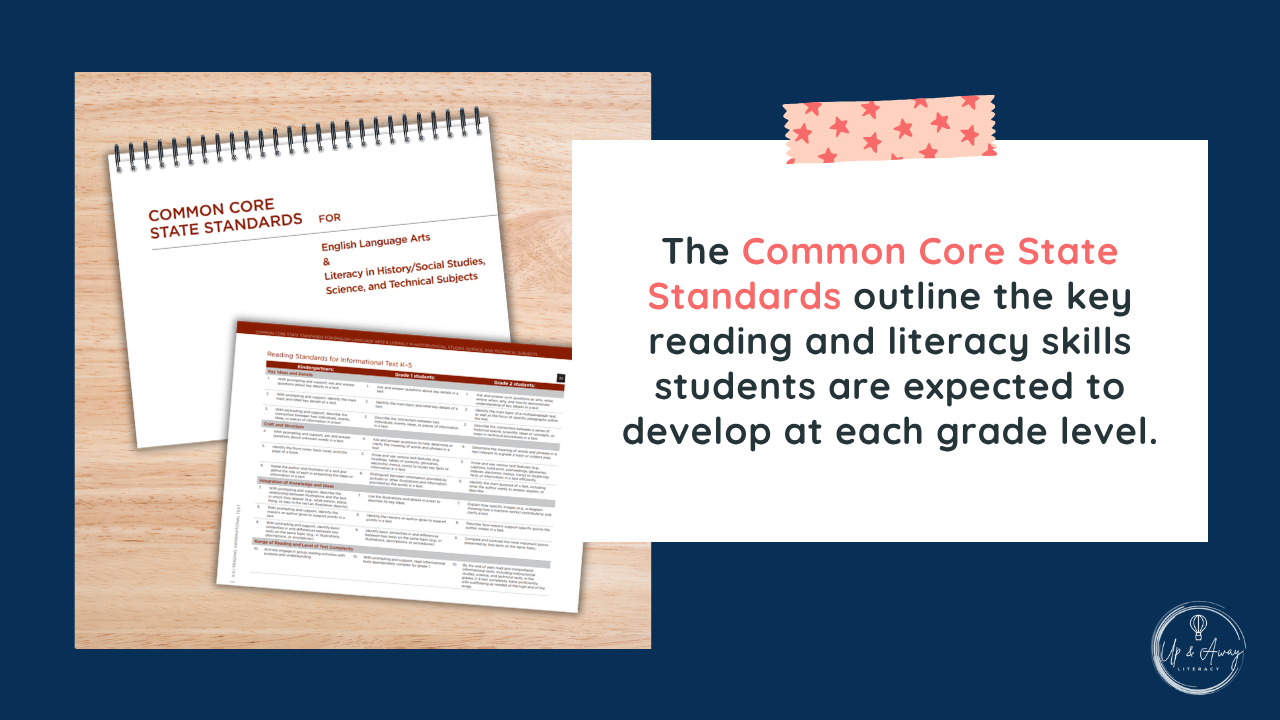
These standards outline the key reading skills students are expected to learn in each grade—from Kindergarten through high school. They’re incredibly helpful for teachers when planning instruction and tracking student progress.
But for parents… they can feel like a lot.
The standards are often written in technical language and can be overwhelming to sort through and fully understand—especially if you’re just trying to figure out how to help your child at home.
That’s exactly why I created a more parent-friendly option.
A Parent-Friendly Checklist of K-2 Reading Skills
Instead of guessing if your child is on track (or researching all of the Common Core standards for your child's grade level!), I created a clear checklist of skills, based on the standards, to guide you.
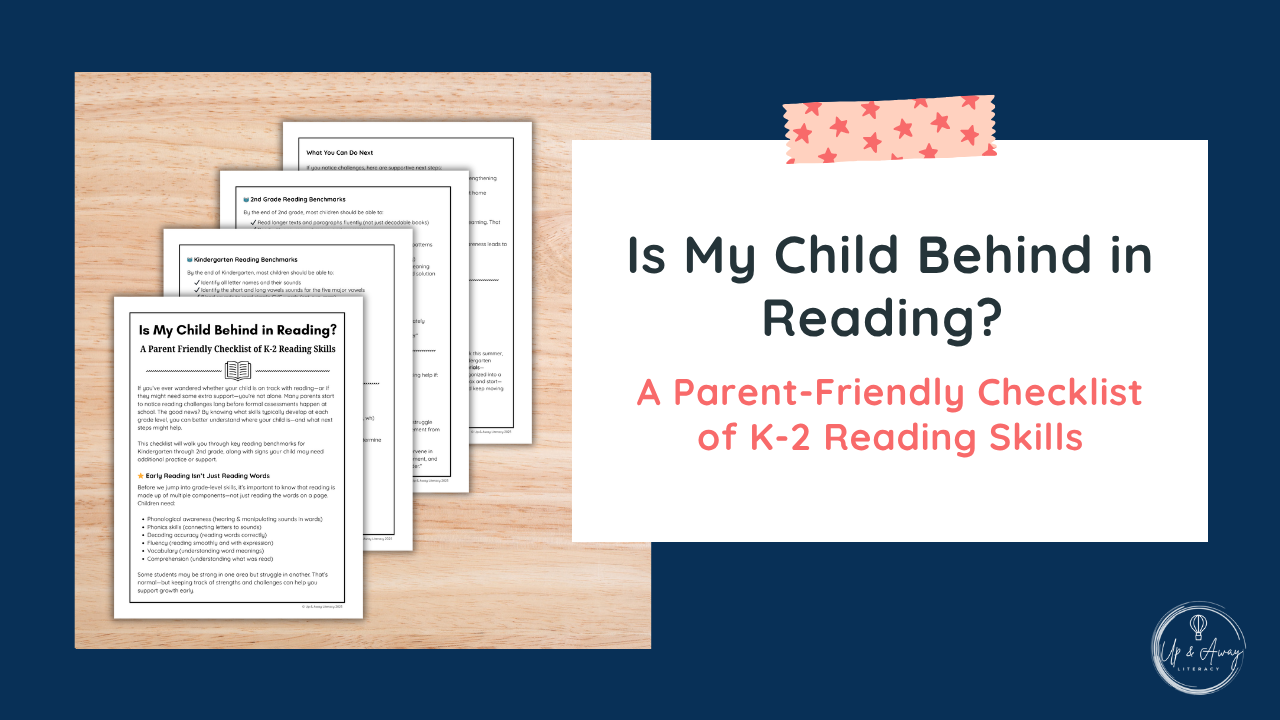
The checklist will:
- walk you through key reading benchmarks for Kindergarten through 2nd grade
- help you spot signs your child may need additional practice or support
- give you ideas for next steps if your child is behind

It’s designed to be simple, clear, and actually helpful (no confusing jargon or overwhelming information!)
What to Do If Your Child Is Behind
First, take a deep breath.
This doesn’t mean your child can’t become a strong reader. It just means they need the right kind of support.
The most important things you can do are:
- Reach out to your child's teacher for ideas and support
- Focus on foundational skills (not just more reading time)
- Keep practice short, consistent, and fun
- Have a plan for summer reading practice
Even small, targeted practice can make a big difference.
Don’t Let Summer Set Your Child Back... A Simple Plan for Summer Reading
Want to know one of the biggest challenges I see every year?
Kids who are already struggling in reading often lose even more ground over the summer.
When reading practice stops, skills can slip quickly—especially for developing readers.
But the good news is… it doesn’t take hours a day to make an impact.
If you’ve been thinking ahead to summer and wondering how to support your child without turning into their full-time teacher…
That’s exactly why I created my Summer Reading Boost Boxes!

Summer Reading Boost Boxes are available for:
- Rising into Kindergarten
- Rising into 1st Grade
- Rising into 2nd Grade
- Rising into 3rd Grade
.... making it easy to choose the right level for your child. Each box is thoughtfully designed to meet your child where they are—whether they’re just beginning to read or continuing to build fluency and confidence.
Each box includes:
-
8 weeks of organized, step-by-step materials
-
Decodable reading practice
-
Word lists and simple spelling routines
-
Engaging games your child will actually want to play
-
Weekly checklists so you know exactly what to do
No prep. No guesswork. Just open and go.
It’s a simple way to keep your child moving forward—without the overwhelm.
You've Got This!
If you’ve been wondering whether your child is behind, the fact that you’re asking the question already says so much.
You care. You’re paying attention. And you’re taking steps to help.
That’s what matters most.
Start with the checklist. Get a clear picture of where your child is.
And then take one small step forward at a time.
Because with the right support, your child can become a confident, successful reader!
Stay In-The-Know!
New tips, courses, and resources delivered straight to your inbox. Sign up for my email list below so you don't miss a thing!
