
How the Brain Learns to Read: The Science of Reading Explained in Kid-Friendly Language
For years, the Science of Reading has been discussed by researchers, teachers, and adults—but rarely explained to students. That’s a missed opportunity.
Let’s change that!
When students understand how their brains learn to read, reading becomes less mysterious and much more empowering. Below is a simple, kid friendly way to explain the what, why, and how of the Science of Reading to your students.
What Is the Science of Reading?
The Science of Reading is research that explains how the brain learns to read. For students, this does not need to be complicated. There are just a few big ideas their brains need to know. (If you'd like to get your hands on the cute posters below, be sure to read to the bottom!)
1. Reading Is Learned
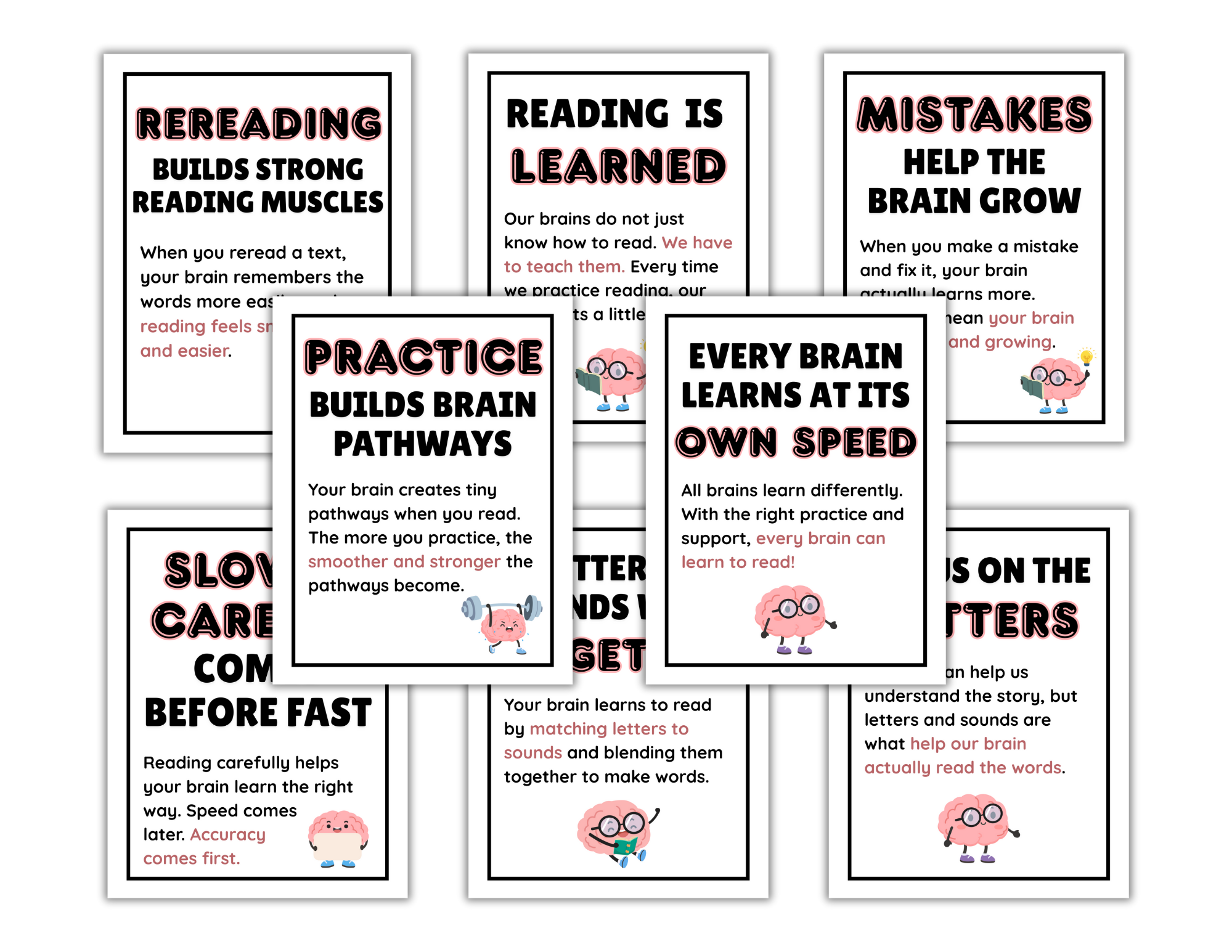
Our brains do not just know how to read. We have to teach them. Every time we practice reading, our brain gets a little stronger.
2. Practice Builds Brain Pathways
Each time you read, your brain creates a tiny pathway. The more you practice, the smoother and stronger that pathway becomes.
3. Letters and Sounds Work Together
Your brain learns to read by matching letters to sounds and blending them together to make words.
4. Slow and Careful Comes Before Fast
Reading carefully helps your brain learn the right way. Speed comes later. Accuracy comes first.
5. Mistakes Help the Brain Grow
When you make a mistake and fix it, your brain actually learns more. Mistakes mean your brain is working and growing.
6. Pictures Help Understanding and Letters Help Reading
Pictures can help us understand the story, but letters and sounds are what help our brain actually read the words.
7. Rereading Builds Strong Reading Muscles
When you reread a text, your brain remembers the words more easily, and reading feels smoother and easier.
8. Every Brain Learns at Its Own Speed
All brains learn differently. With the right practice and support, every brain can learn to read.
Why Explain This to Students?
When we explain the Science of Reading to students, we replace mystery with understanding.
Instead of seeing reading as a talent, students begin to see it as a skill they are building. This understanding improves effort, reduces guessing, builds persistence, and helps students take ownership of their learning.
When students know why something feels hard, they are more likely to stick with it.
How to Teach These Ideas
Start simple. Use consistent language and teach one key idea at a time.
It is also important to explain the why behind routines such as why we count syllables and tap the sounds. Normalize struggle by saying this feels hard because your brain is learning, and use visuals and analogies to make abstract ideas concrete.
If you are ever wondering why you do something as a teacher, ask. Understanding the why matters for adults too.
Use Visuals to Make It Stick
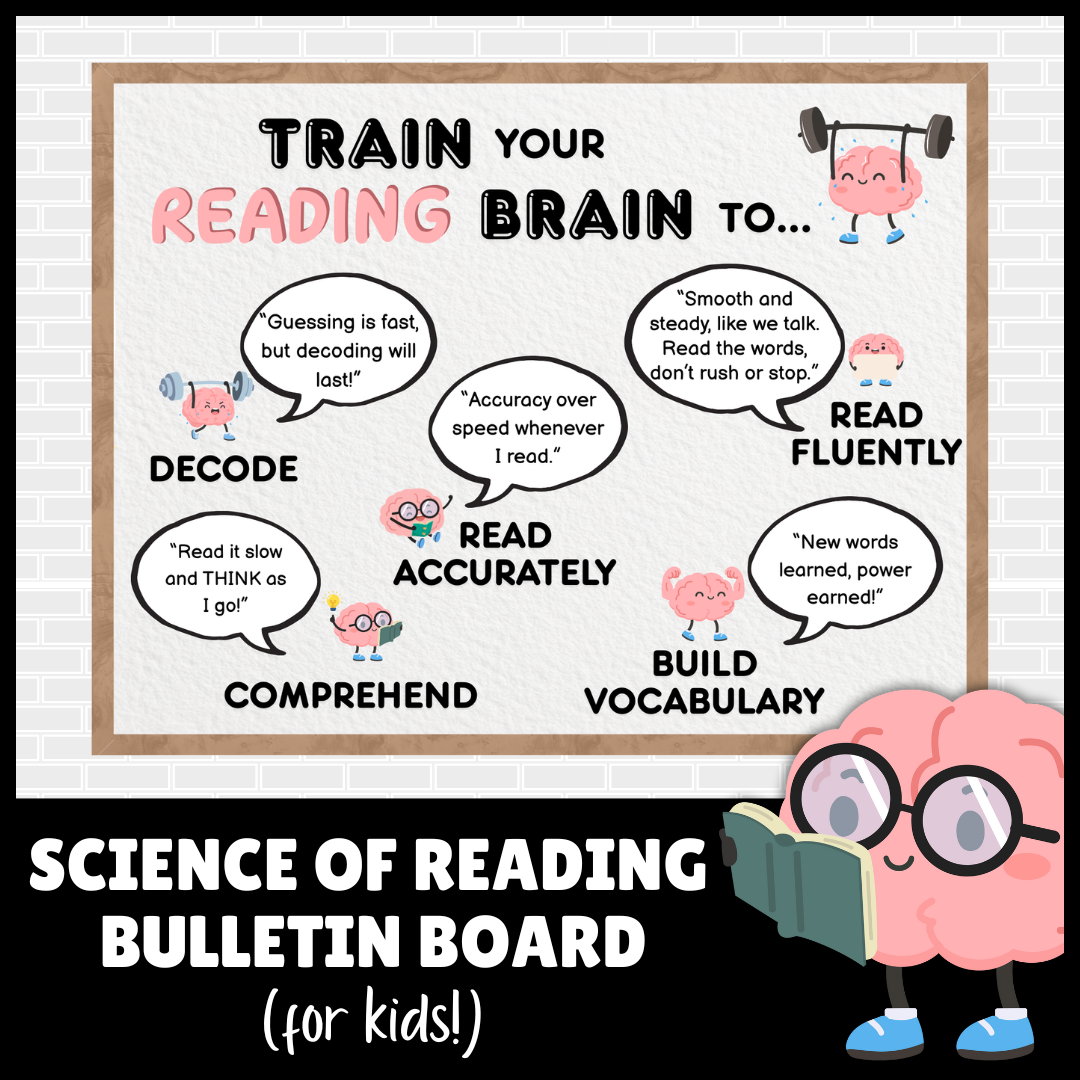
Visual supports help these ideas come alive for students. That's why we created a kid friendly bulletin board that explains how we train our brains to read. This bulletin board is available, along with the posters above, by clicking HERE! (or the image below)
If you have questions about the Science of Reading, others probably do too. We are always happy to help because when students understand how reading works, everything changes!
The Resources You Need, All in ONE Membership
We understand that purchasing resources one by one adds up fast—and as teachers, we know every dollar matters. That’s why our K-2 membership, Launching Literacy, is a smarter and more cost effective option. Our membership gives you everything you need for small group instruction—all in one place—so you can save time, money, and stress.
No more weekends wasted hunting for Science of Reading–aligned heart word resources, phonics lessons, and decodable texts. With Launching Literacy, you simply log in, choose the skill you want to teach, and instantly download detailed, ready-to-use lesson plans and activities.
In just a few clicks, your small group lessons are prepped and ready to teach—so you can spend less time planning and more time making an impact in your classroom. It’s planning made simple, effective, and affordable.

We hope that you found this blog post helpful! Whether you choose to join the membership or not, we are always here to help you in any way we can. Send us an email at: [email protected] with any questions you have!
Stay in-the-know!
New tips, courses, and resources delivered straight to your inbox. Sign up for our email list below so you don't miss a thing!
