

Smooth Literacy Center Transitions: A Simple Routine That Saves Instructional Time
Small-group instruction and literacy centers can be some of the most valuable parts of the literacy block—but only when the routines surrounding them actually work.
During small-group instruction, you have the opportunity to meet students where they are. You can provide targeted, differentiated instruction based on the specific skills each group needs, give immediate feedback, and adjust your teaching in ways that are difficult to do during whole-group instruction.
At the same time, literacy centers give students multiple opportunities to practice the skills you're teaching. Students might encounter the same phonics skill during explicit instruction, then practice it again through word work, spelling, decodable reading, or fluency.
That repeated practice matters.
But there’s one part of the small-group and center block that can quietly eat away at all of that valuable instructional time:
Transitions.
When a 2-Minute Transition Turns Into 5
You know the scene.
The timer goes off.
One student immediately heads to the next center. Another is still finishing the last question. Someone can't find their pencil. Two students are debating whose job it is to put something away. Another group is already across the room—and somehow the volume has doubled in approximately three seconds. 🤦♀️
Meanwhile, you're trying to get your next small group seated and ready to begin.
A transition that should take a minute or two can easily turn into several minutes of lost instructional time.
And when students rotate multiple times during the literacy block, those minutes add up quickly.
The problem isn't necessarily the centers themselves. Often, students simply need a clear transition routine that tells them exactly what to do when it's time to switch.
Instead of repeatedly saying:
"Clean up!"
"Check where you go next!"
"Bring your pencil!"
"Keep your voices down!"
…build those expectations directly into the transition.
Try This Simple Literacy Center Transition Routine
The goal is to make transitions predictable.
Students should eventually be able to hear the signal and move through the entire routine without you directing every step.
Here are three simple pieces you can put in place.
1. Use a Timer Slide
Keep a transition slide projected where students can easily see it.
When center time ends, switch to the transition slide and start a short visual timer—maybe 1–2 minutes, depending on your classroom and setup.
Your slide can include simple reminders such as:
CLEAN UP → CHECK YOUR NEXT CENTER → MOVE → GET READY
The visual timer gives students a clear sense of urgency without you having to constantly announce how much time they have left.
Even better? Challenge the class to be completely ready before the timer reaches zero.
If you'd like to download a free timer slide, click the image below! You'll find it (along with MANY other literacy resources) in my Free Downloads Library for teachers 😊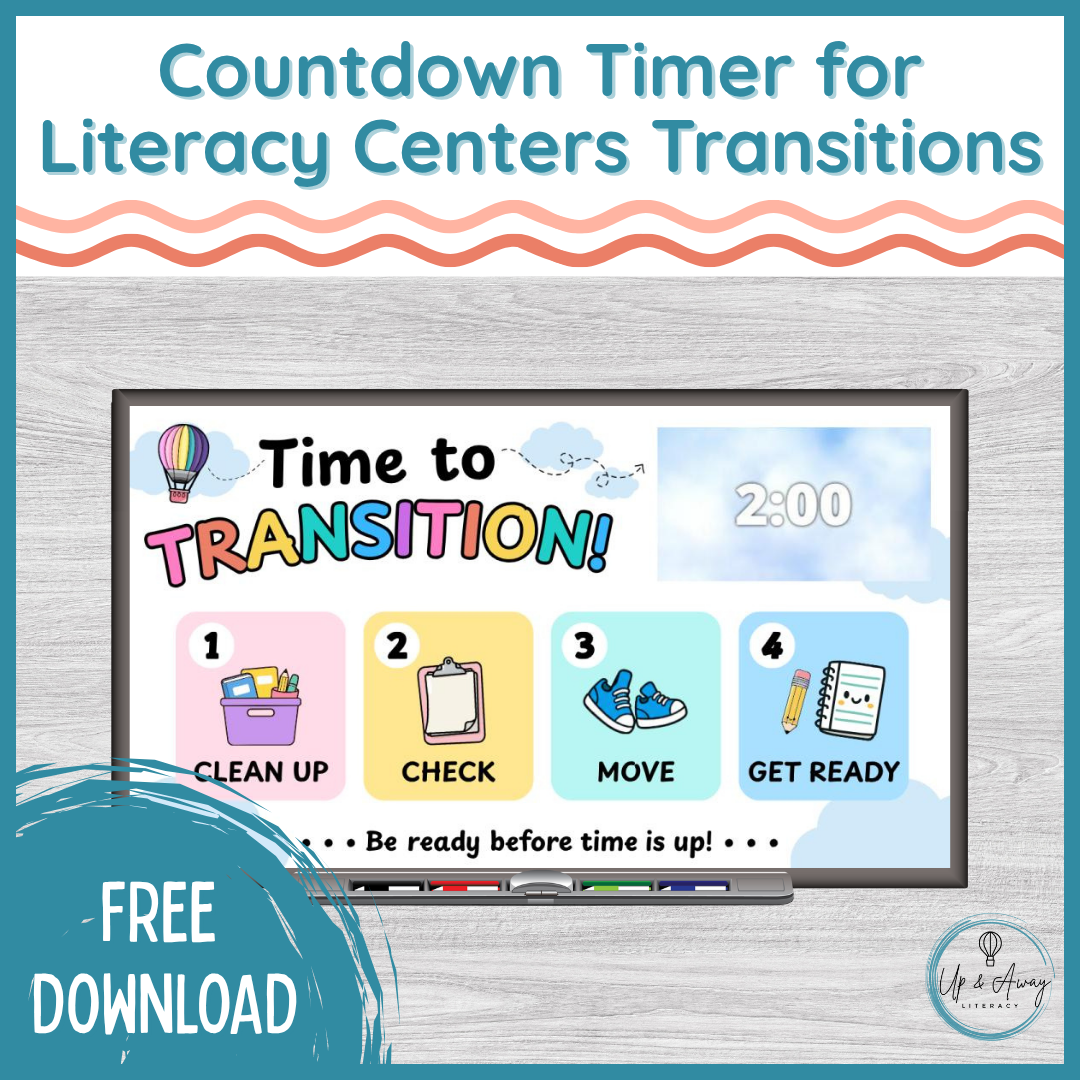
2. Add Transition Music
Choose one short song or instrumental clip that plays only during transitions.
The music becomes another cue that tells students:
Center time is over. It's time to clean up and move.
Students should know that by the time the music stops, they need to be:
-
cleaned up
-
at their next center
-
materials ready
-
voices off or at the expected level
Using the same music consistently helps the routine become automatic.
Instead of your voice being the transition signal, the environment does the reminding for you.
3. Give Students Specific Jobs
One of the biggest causes of transition chaos is that everyone is trying to do everything—or no one is quite sure who is supposed to do what.
Assigning simple jobs can help.
For example, each center group might have:
Materials Manager: Returns materials and makes sure the center is ready for the next group.
Checker: Looks over the center area and makes sure everything has been cleaned up.
Schedule Checker: Checks where the group goes next and helps the group move to the correct location.
Supply Helper: Makes sure shared supplies such as pencils, whiteboards, markers, or headphones are where they belong.
You don't need a complicated classroom job system. The goal is simply to make responsibilities clear.
When students know, "This is my job when the timer goes off," there's much less waiting around for someone else to take care of it.
Put It All Together
Your transition might look like this:
Timer sounds → Transition music begins → Students complete their jobs → Students check their next center → Students move → Students get materials ready → Music ends → Center begins.
That's it.
At first, you'll need to explicitly teach the routine.
Practice it when you're not trying to run small groups. Model what a successful transition looks like—and what it doesn't look like. Let students practice. Time them. Celebrate improvement.
You might even practice the transition several times in a row before adding actual center activities.
Because here's the key:
Center transitions are a routine that needs to be taught—not just a direction students are expected to follow.
Protect Your Small-Group Time
A strong literacy center system isn't just about having great activities.
The routines surrounding those activities matter, too.
When transitions are predictable, students spend less time wandering, talking, searching for materials, and figuring out what they're supposed to do next.
And that means something even more important:
More of your literacy block is actually spent on literacy.
A simple timer, familiar music, and clearly assigned jobs can turn one of the most chaotic parts of the literacy block into a routine your students can eventually manage almost independently.
And when students know exactly what to do between rotations, you can keep your attention where you really want it—on the students sitting at your small-group table.
Looking for Ready-to-Use Literacy Center Resources?
Smooth transitions are one piece of making your literacy centers work. The other? Having meaningful, skill-aligned activities ready for students to practice independently.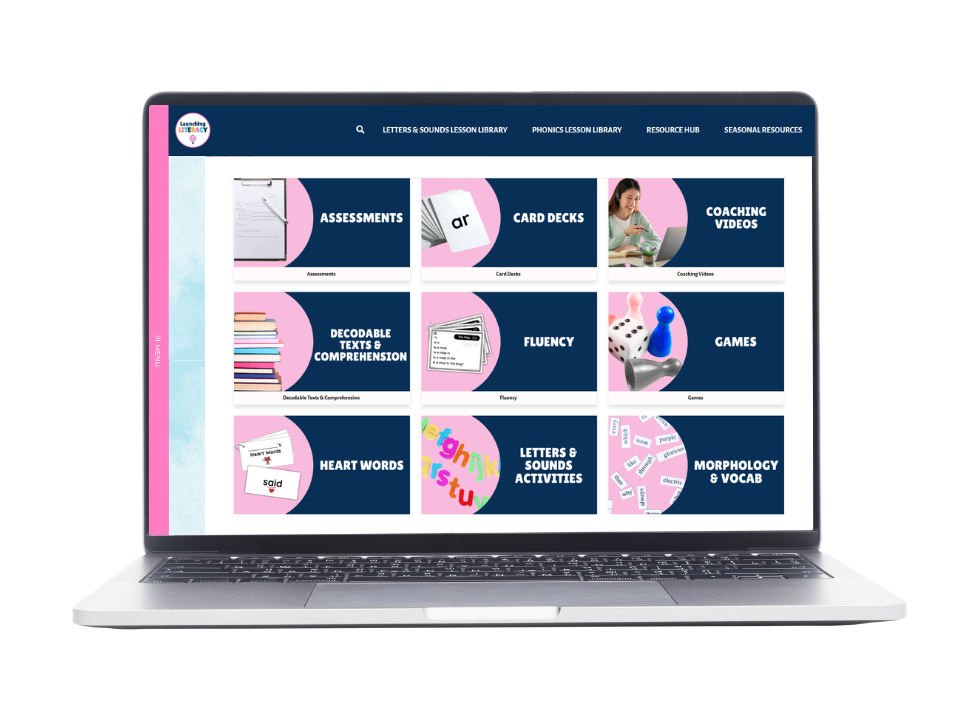 Inside Launching Literacy, you'll find ready-to-use resources for word work, spelling, decodable reading, fluency, heart words, and more—all designed to give students multiple opportunities to practice the skills you're teaching.
Spend less time searching for center activities and more time using your small-group block for what matters most: targeted instruction.
Stay In-The-Know!
New tips, courses, and resources delivered straight to your inbox. Sign up for my email list below so you don't miss a thing!
