
Teaching Letters & Sounds: 6 Best Practices for Teachers and Parents
Whether you’re a teacher in a kindergarten classroom or a parent at your kitchen table, if you’re teaching young learners their letters and sounds, you’ve probably wondered:
Am I doing this the “right” way?
Should I teach the letters from A–Z? Is there a better order?
Should I focus on letter names first? Sounds first? Both?
You're definitely not alone.
The good news? We have decades of research (hello, Science of Reading 👋) that give us really clear guidance. And when we follow it, kids don’t just memorize letters... they actually build a strong foundation for future reading success.
In today's blog post, we're going to discuss 6 best practices for teaching letters and sounds, in a way that works for both teachers and parents!
1️⃣ Follow a Research-Backed Sequence
The standard A–Z sequence doesn’t reflect how often letters actually appear in English words, nor does it prioritize letters that can be combined to create decodable words quickly.
Research in early literacy (e.g., Ehri, Juel, National Reading Panel) indicates:
- High-frequency letters should be prioritized.
-
Children benefit when they see and use letters in context, not just in isolation (blend learned sounds to read simple words like am, sat, in, fit, dot)
-
Early instruction should be systematic and explicit, meaning we follow a predefined sequence and not random letter lists.
In other words: if kids can put what they’re learning to work right away by blending, reading, and writing, they will be much more successful mastering their letters and sounds!
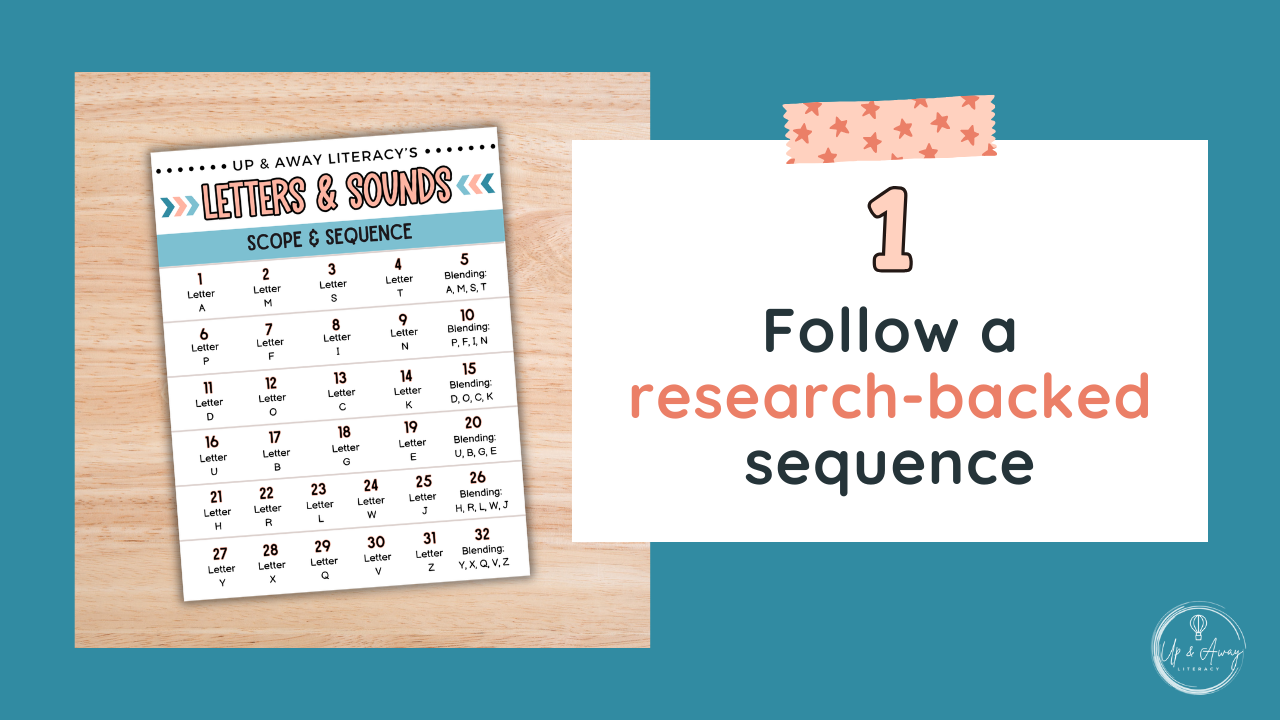
Below is a recommended sequence that we've used for years, and has been very successful with young learners. This sequence starts with letters that are common and flexible in early words, plus groupings that allow instant blending practice. (To download a free copy, click the image below!)
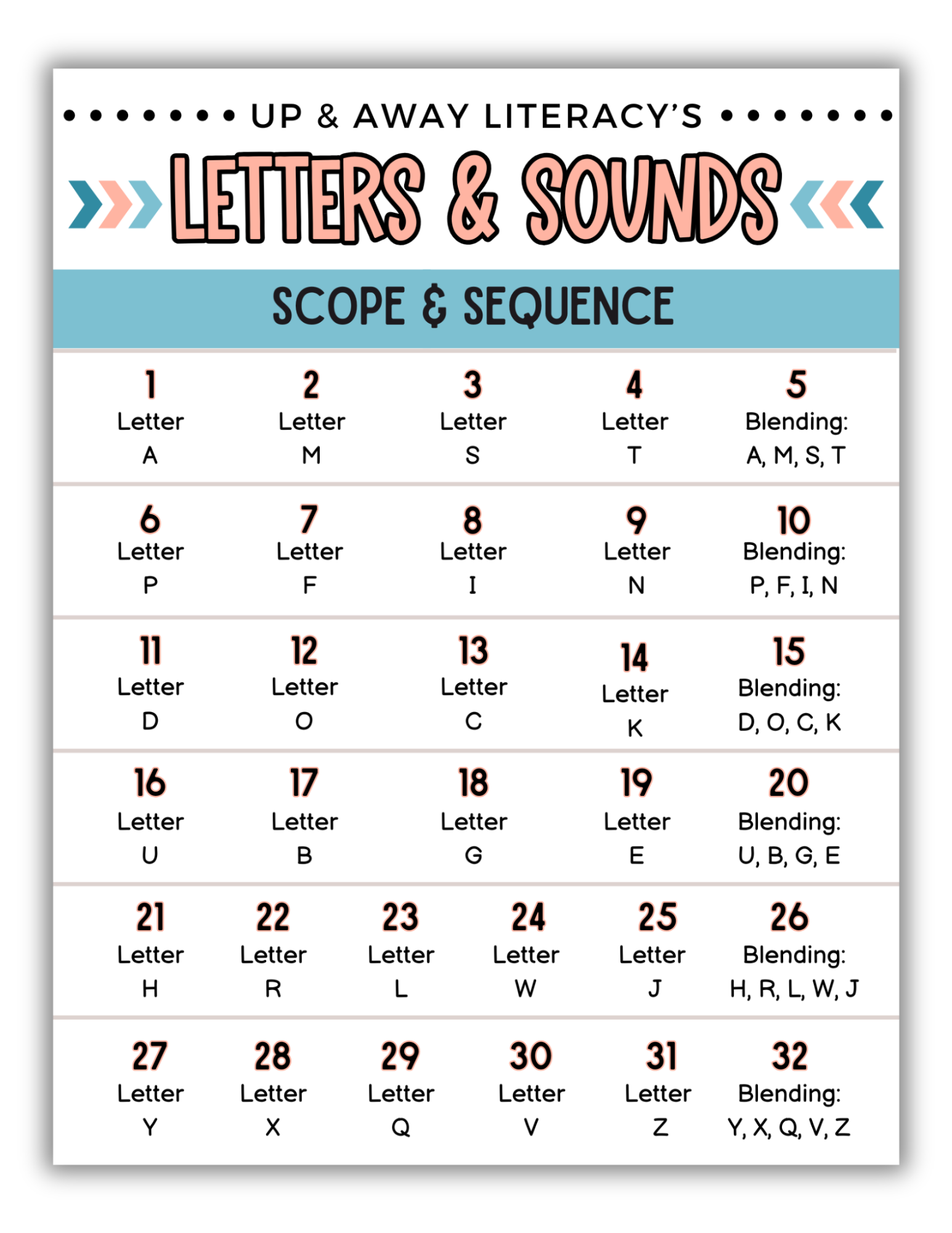
These strategic groupings:
- Begin with letters kids actually see in many English words
- Give students blending power early (2- and 3-letter words right away)
- Support stronger orthographic learning (the connection between letters, sounds, and spellings)
➡️ Group 1: A, M, S, T
Kids can begin (don't expect mastery yet) to read and write words like: am, at, sat, as, mat
➡️ Group 2: P, F, I, N
Kids can begin to read and write words like: pin, fin, in, nip, if, nip
➡️ Group 3: D, O, C, K
Kids can begin to read and write words like: cod, cop, nod, cot
➡️ Group 4: U, B, G, E
Kids can begin to read and write words like: bug, beg, bed, bud
➡️ Group 5: H, R, L, W, J
Kids can begin to read and write words like: hug, red, wed, jug
➡️ Group 6: Y, X, Q, V, Z
These letters and sounds are less frequent but still important for full alphabet mastery. Kids can begin to read and write words like: yes, mix, vet, zip, quit
What This Looks Like:
- Teach one letter at a time. Example, start with the letter A. Then, after a few days of working with the letter A, introduce the next letter (M).
- Continue slowly introducing letters until all letters in the group have been taught (A, M, S, T)
- Teach how to blend and read words with the learned letters. Start with 2-letter words (at, am) and work up to 3-letter words (mat, sam, sat). You can also teach how to spell simple 2- and 3-letter words with these letters.
- Teach the first letter of the next group (P). Review all learned letters and sounds (A, M, S, T, P). This consistent review is CRUCIAL!
- After a couple days of practice, introduce the next letter in the group (F). Review all learned letters and sounds (A, M, S, T, P, F).
- Repeat the process until all letters and sounds have been taught.
- Continue reviewing often, especially with the letters that aren't as frequent and can be more challenging to young learners (Q, W, J, Y)
2️⃣ Teach Letter Names and Sounds Together
One of the biggest myths out there is that you have to teach letter names before sounds. Research says otherwise.
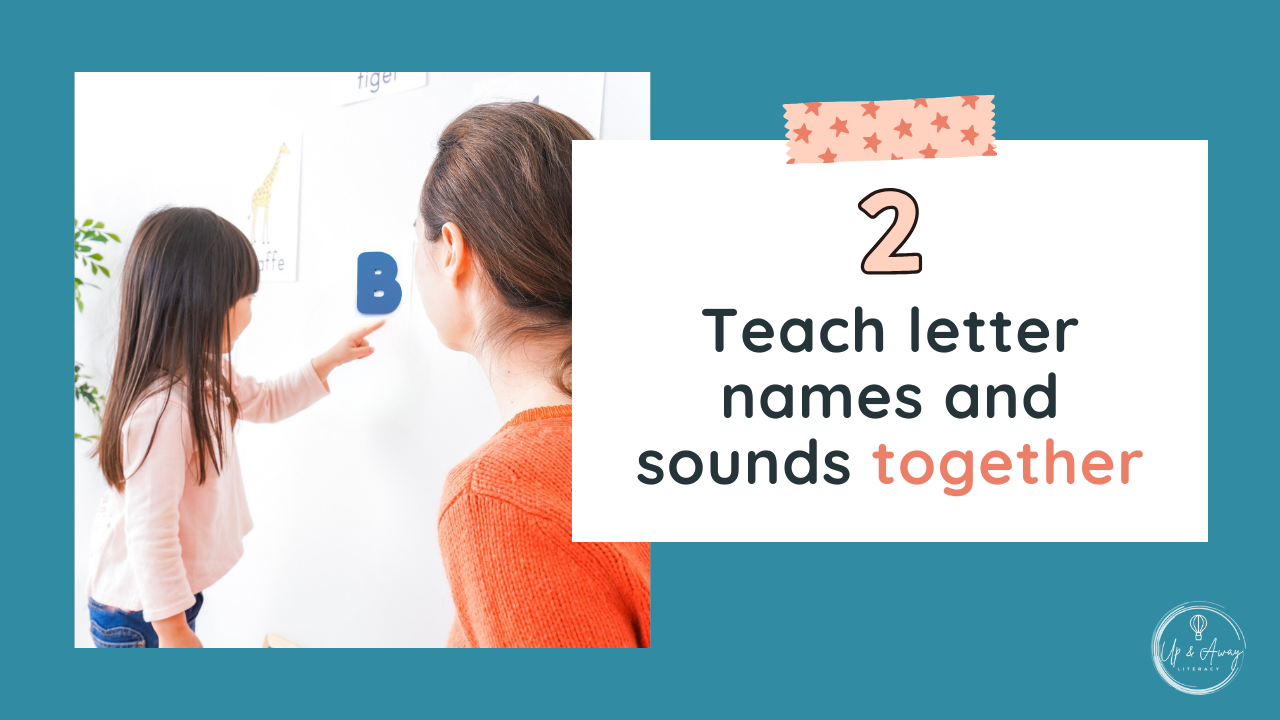
Children benefit from learning the letter name and sound at the same time. In fact, knowing letter names can actually help children remember sounds because many letter names contain cues for the sound (like b in “bee”).
Instead of:
“This is B. Say B.”
Try:
“This is B. B says /b/.”
Keep it short. Clear. Consistent.
An Important Note...
When teaching letter sounds, avoid adding /uh/ after each one. For example, when teaching the sound of the letter T,
Instead of:
"T says /tuh/"
Say:
"T says /t/"
Those added “uh” sounds (called a schwa sound) can make blending harder later. If your child begins adding the /uh/ after the sound, remind them to "clip it" while making a scissors motion with your fingers.
3️⃣ Use Picture Cues At First (But Not Forever)
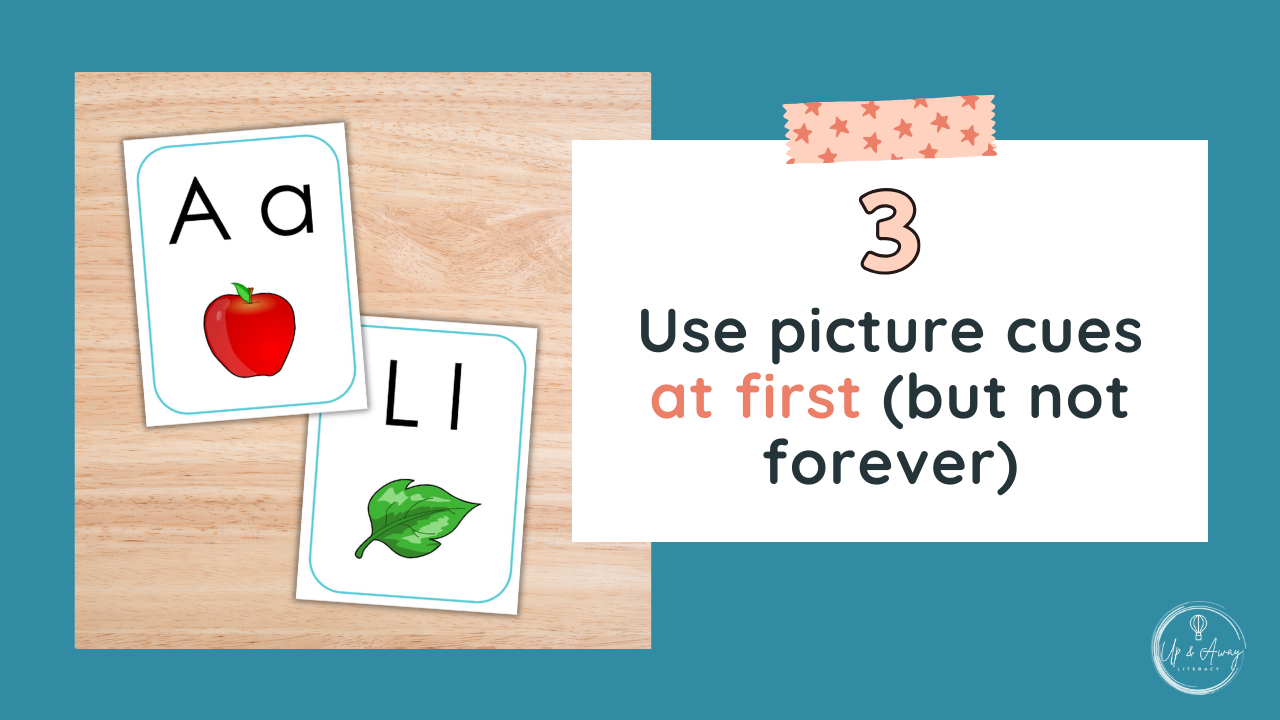
When children are first learning letters and sounds, picture cues can be incredibly helpful.
An apple for A.
A sun for S.
A mop for M.
These visuals act like training wheels. They give children something concrete to anchor the abstract symbol (the letter) to a sound.
In the very beginning, that’s supportive. But here’s the important part: picture cues are a bridge — not the destination.
Our goal isn’t for a child to see the letter S and think:
“Sun… /s/.”
Our goal is for them to see S and instantly know:
“/s/.”
That instant recognition is called automaticity — and it’s critical for fluent reading later on. When children have to mentally search for the picture every time, it slows them down and uses up valuable brain power that should be going toward blending and comprehension.
So what does this look like in practice?
- In the beginning, use a consistent, clear keyword picture to introduce the new letter and sound
- After students are familiar, gradually take away the picture by covering it up with your hand or a post-it note
- Remove the pictures completely once automatic
Think of it like riding a bike. Training wheels help at first. But if we never take them off, balance never develops. Picture cues support learning — but automatic letter-sound recognition is the real goal.
4️⃣ Make It Multisensory
Young children learn best when they use multiple senses. Incorporating multisensory learning doesn’t have to mean messy bins of shaving cream (though those can be fun!). It means intentionally engaging multiple pathways in the brain at the same time.
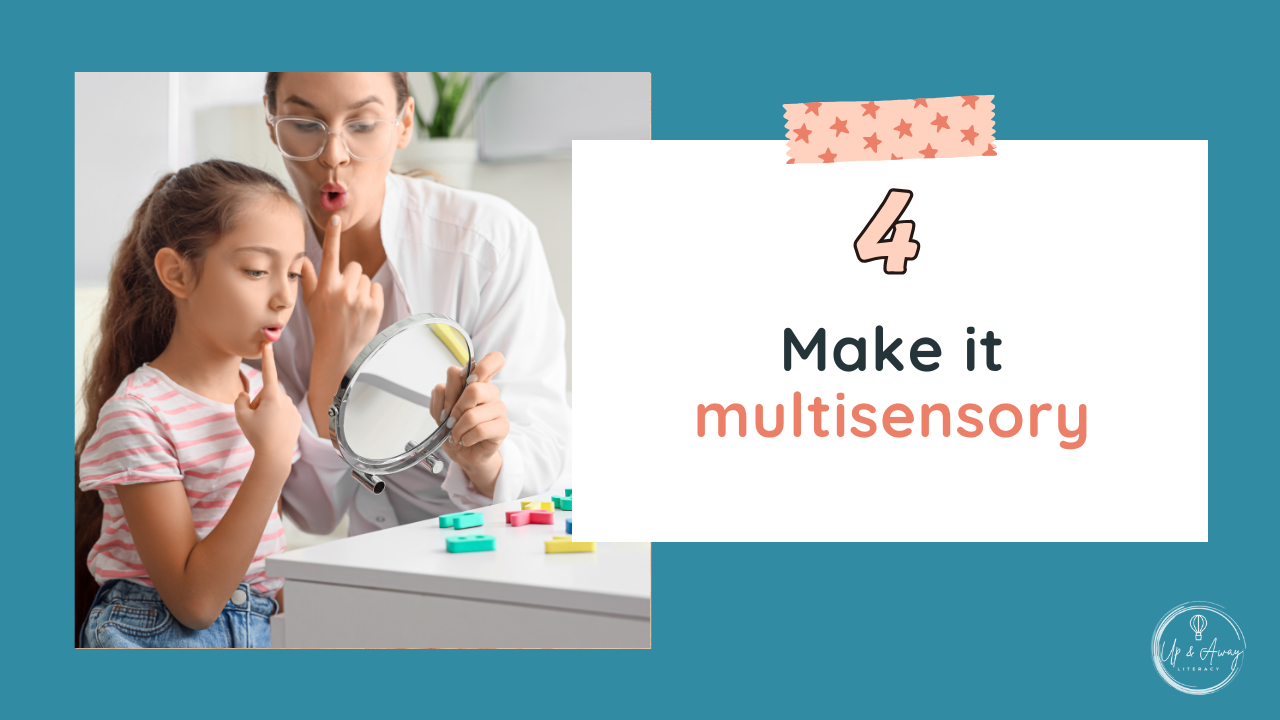
When introducing a letter, children should see the letter, say the sound, and become aware of how the sound feels in their mouth.
- Is their mouth open or closed? (Use a hand-held mirror to make it more engaging!)
- Is their voice on or off?
For example, when saying /m/, our lips are closed and our voice is on; when saying /t/, our mouth opens slightly and our voice is off. That kind of articulation awareness strengthens sound memory and builds a deeper understanding of how speech works.
At the same time, students can practice writing the letter while saying, “A says /a/,” connecting motor movement with sound and symbol.
When children look at the letter, produce the sound, notice how it feels, and write it — all in one routine — they build stronger, more durable connections that support reading and spelling later on.
5️⃣ Play with Sounds (No Letters Needed)
Phonological awareness is the understanding that spoken language is made up of sounds — and that those sounds can be noticed, identified, and manipulated. It’s completely auditory. No letters. No print. Just listening to and working with the sounds in words.
Phonological awareness is a HUGE predictor of reading success so it's important that we incorporate it into our daily practice.
You can build phonological awareness through simple activities like:
-
"What are some words that start with /s/?"
-
“What sound do you hear at the beginning of sun?”
- "What sound do you hear at the end of mop?"
-
"Blend these sounds. What word do you get? /c/ /a/ /p/"
- Rhyming games "What rhymes with win?"
It's especially helpful if you incorporate the sounds that have been recently taught. For example, if you've recently introduced the letter T and its sound, /t/, do some sound work with words that start with /t/, end with /t/, etc.
Teachers: Embed PA work daily in your literacy block. It doesn't need to take long, 5-10 minutes is plenty.
Parents: Play these sound games in the car, at dinner, during bath time. It doesn’t need to feel like a lesson!
6️⃣ Provide Lots of Opportunities for Review
Learning letters and sounds is not a “one and done” situation. Children need consistent review and repetition to achieve mastery.
When children are first taught a letter and sound, it’s sitting in short-term memory — and without repeated practice, it fades quickly. The brain strengthens connections through retrieval and repetition, especially when practice is consistent over time.
Regular review helps move letter-sound knowledge into long-term memory so children can recall it automatically (which is essential for blending and fluent reading).
The key is to keep review quick, active, and varied.
You might do rapid-fire sound drills with letter cards, mix previously taught letters into a “mystery bag” pull, practice sky-writing while saying the sound, or play “What Says?” where you say a sound and children write the letter that makes that sound. Teachers can build cumulative review into their daily phonics routine, and parents can do 3–5 minute refreshers a few times a week. When review is consistent and engaging, letters stop being something children have to think hard about — and start becoming tools they can use with confidence.
Teachers: Spiral review into your daily routine.
Parents: Keep flashcards quick and playful — 3–5 minutes is enough.
Resources for Review
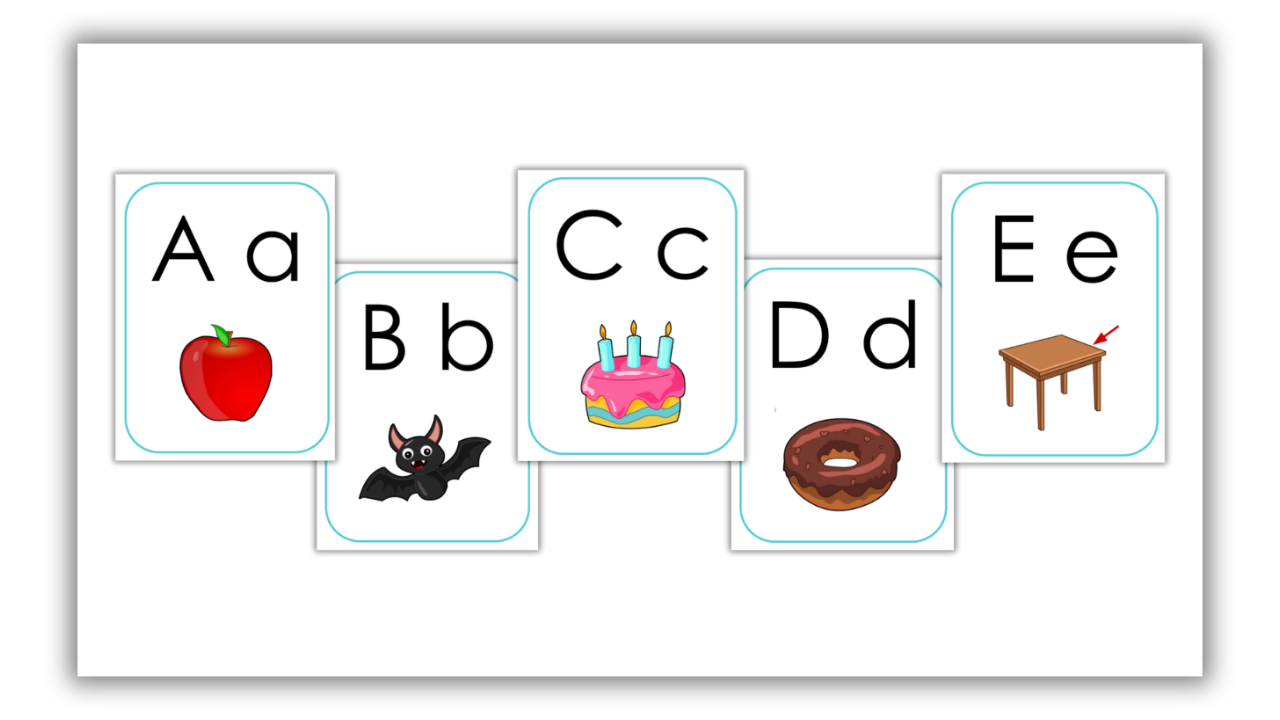
Letter & Sound Flashcard Practice
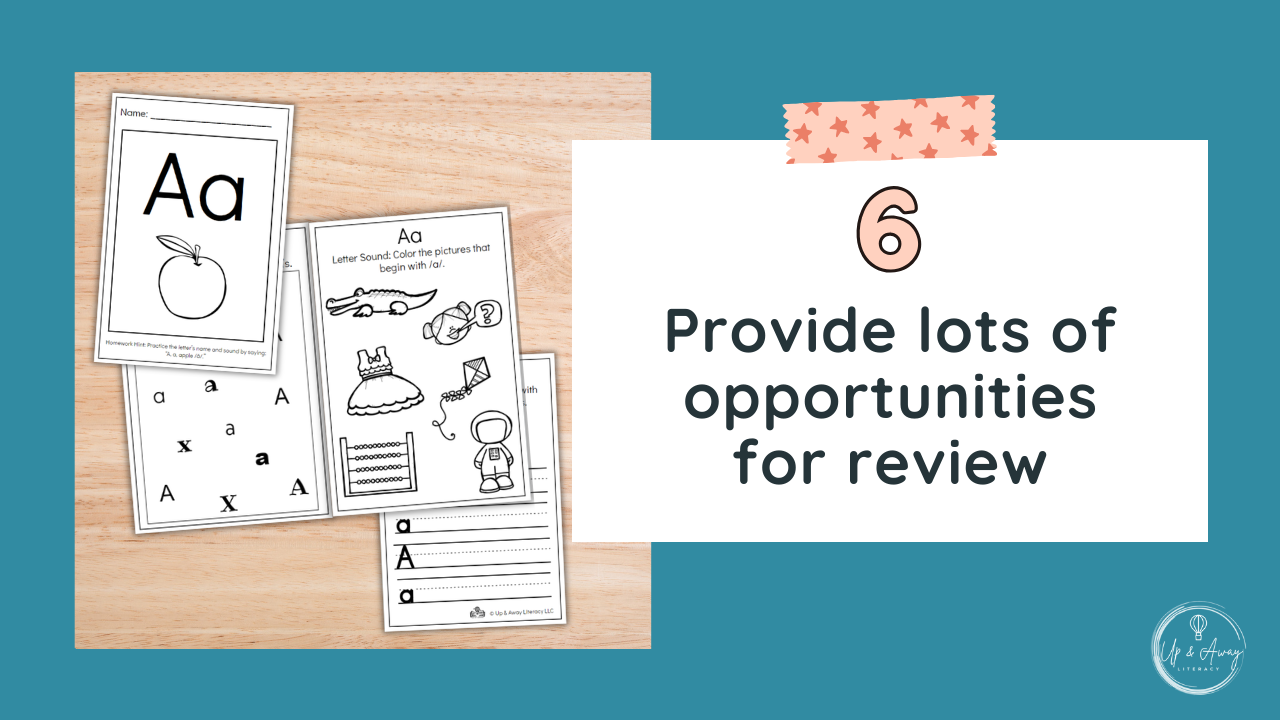
Help your young learners master their letter names and sounds with these Letters & Sounds cards! Each card features the capital and lowercase letter, along with a keyword picture to help them remember the letter's sound.
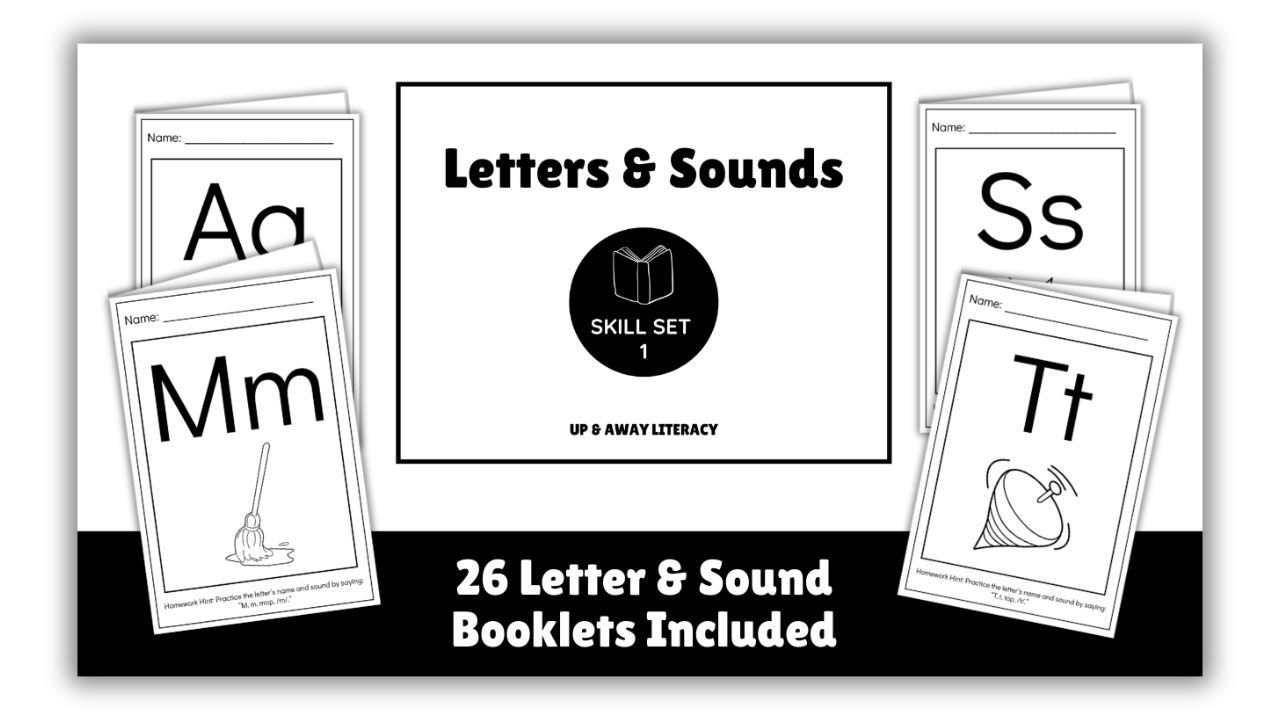
26 Letter Booklets, each featuring...
- Easy to print, 1-page foldable
- Capital and lowercase letter examples with a key word picture
- Easy to follow scripts to make reviewing the new letter and sound simple
- Letter identification practice
- Letter sound identification with pictures
- Multisensory letter formation practice
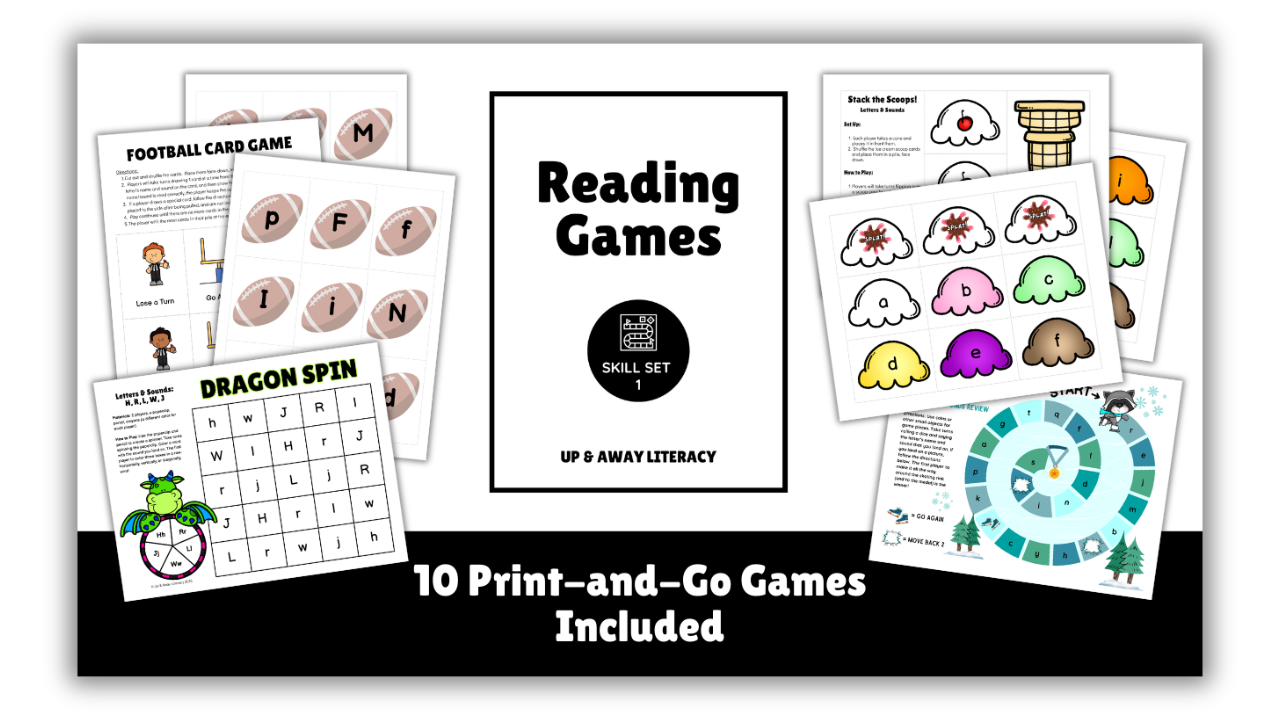
Games are a great way for your child to practice decoding words without it feeling like a chore! This set focuses on Letters & Sounds, and includes 10 games covering the following letter and sound groups: AMST, PFIN, DOCK, UBGE, HRLWJ, YXQVZ, and review of all letters and sounds. Types of games include: various gameboards, card games, a spinner game, and more!
A Reminder for Parents and Teachers
If a child isn’t picking up letters quickly, it doesn’t mean:
-
They aren’t smart
-
You’re doing it wrong
-
They aren’t “ready”
It often just means they need:
-
More explicit instruction
-
More review
-
More connection between sounds and print
Resources for Teaching Letters & Sounds
Digital Letters & Sounds Lessons
Align your letters & sounds instruction with the Science of Reading using this engaging and effective program.

THE LIFT OFF! LETTERS & SOUNDS PROGRAM INCLUDES:
- 26 Digital Letter & Sound Lessons (Google Slides)
- 26 Student Foldables for Each Letter/Sound (PDF File)
- 6 Digital Blending Lessons (Google Slides
- 6 Student Foldables for Each Blending Lesson (PDF File)
- Mini A-Z Cards- perfect for flashcards! (PDF File)
- Example Letter Lesson Script
ORDER OF LESSONS:
Group 1: A, M, S, T + Blending Lesson
Group 2: P, F, I, N + Blending Lesson
Group 3: D, O, C, K + Blending Lesson
Group 4: U, B, G, E + Blending Lesson
Group 5: H, R, L, W, J + Blending Lesson
Group 6: Y, X, Q, V, Z + Blending Lesson
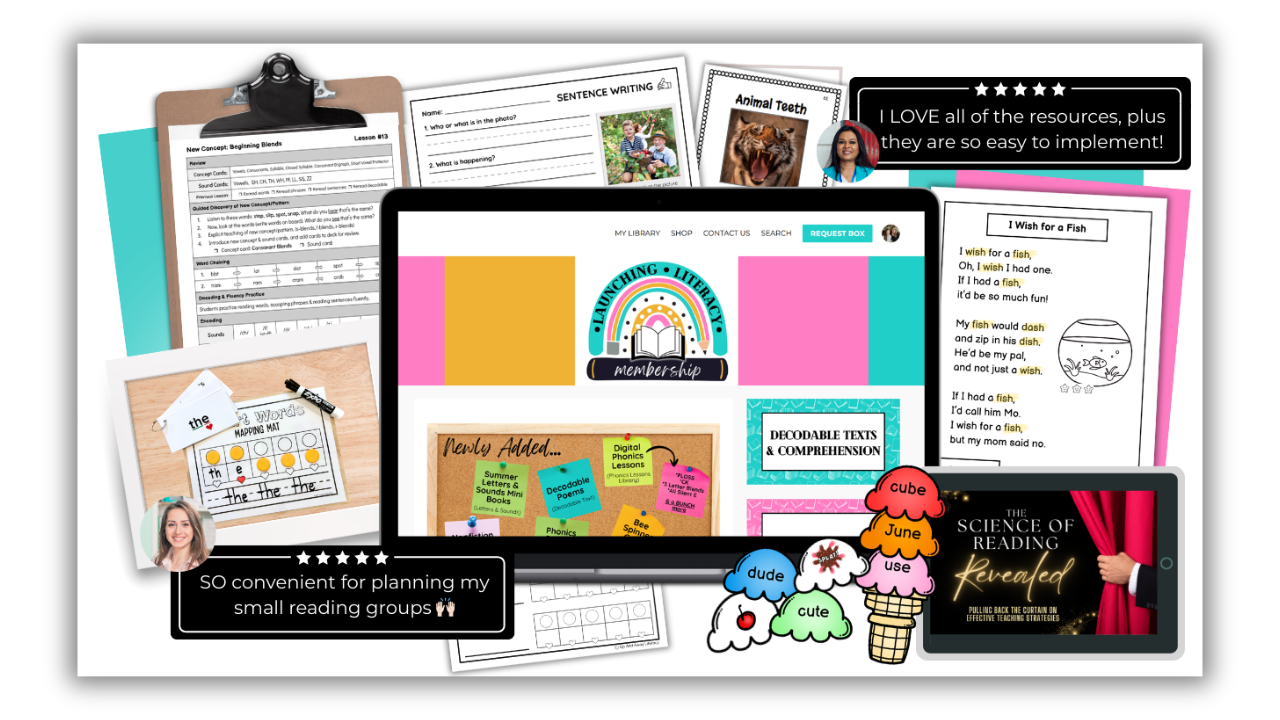
Launching Literacy Membership for Teachers: A K-2 Literacy Membership Designed for Teachers, Reading Specialists & Tutors
No more endless searches for resources or wondering if you’re on the right track with teaching reading. This membership brings you Science of Reading–aligned lesson plans, ready-to-use resources, and supportive coaching—all in one convenient place. Save time, feel confident, and watch your students grow as readers every single day. Developed by two Orton Gillingham certified reading specialists!
Stay in-the-know!
New tips, courses, and resources delivered straight to your inbox. Sign up for our email list below so you don't miss a thing!
